
Symptoms · · 7 min read
Hand, foot and mouth disease: symptoms and home care
Hand, foot and mouth disease is a common viral illness that causes fever, painful sores in the mouth and a rash on the hands and feet. Most children feel better on their own within 7 to 10 days. Your main jobs are easing the pain and keeping fluids going, because a child who will not drink is the one who can get into trouble.
In short
- Hand, foot and mouth disease is caused by viruses and is most common in children under 5, but anyone can catch it.
- The usual picture is fever, a sore throat, painful mouth sores and a rash on the hands and feet.
- There is no medicine that makes it go away faster. Care means easing pain, offering cool drinks and soft food, and waiting it out.
- The main risk is dehydration when mouth sores make drinking too painful.
- The virus can keep spreading for days or weeks after symptoms fade, so hand washing matters even once your child feels well.
What it is and how it spreads
Hand, foot and mouth disease is caused by viruses in the enterovirus family. Most cases in the United States are mild. It is seen most in summer and early fall and spreads easily through child care centers, preschools and summer camps.
The viruses pass from person to person through droplets from coughing, sneezing and talking, through fluid from blisters, and through stool. Touching a contaminated toy or doorknob and then your face can do it too. Because different viruses cause the illness, you can catch it more than once.
What it looks like, step by step
- The first days.Fever, a sore throat, poor appetite and a general unwell feeling often come first.
- A day or two later.Painful sores or small blisters appear in the mouth, often on the tongue and inside the cheeks. A child may drool and refuse food or drink.
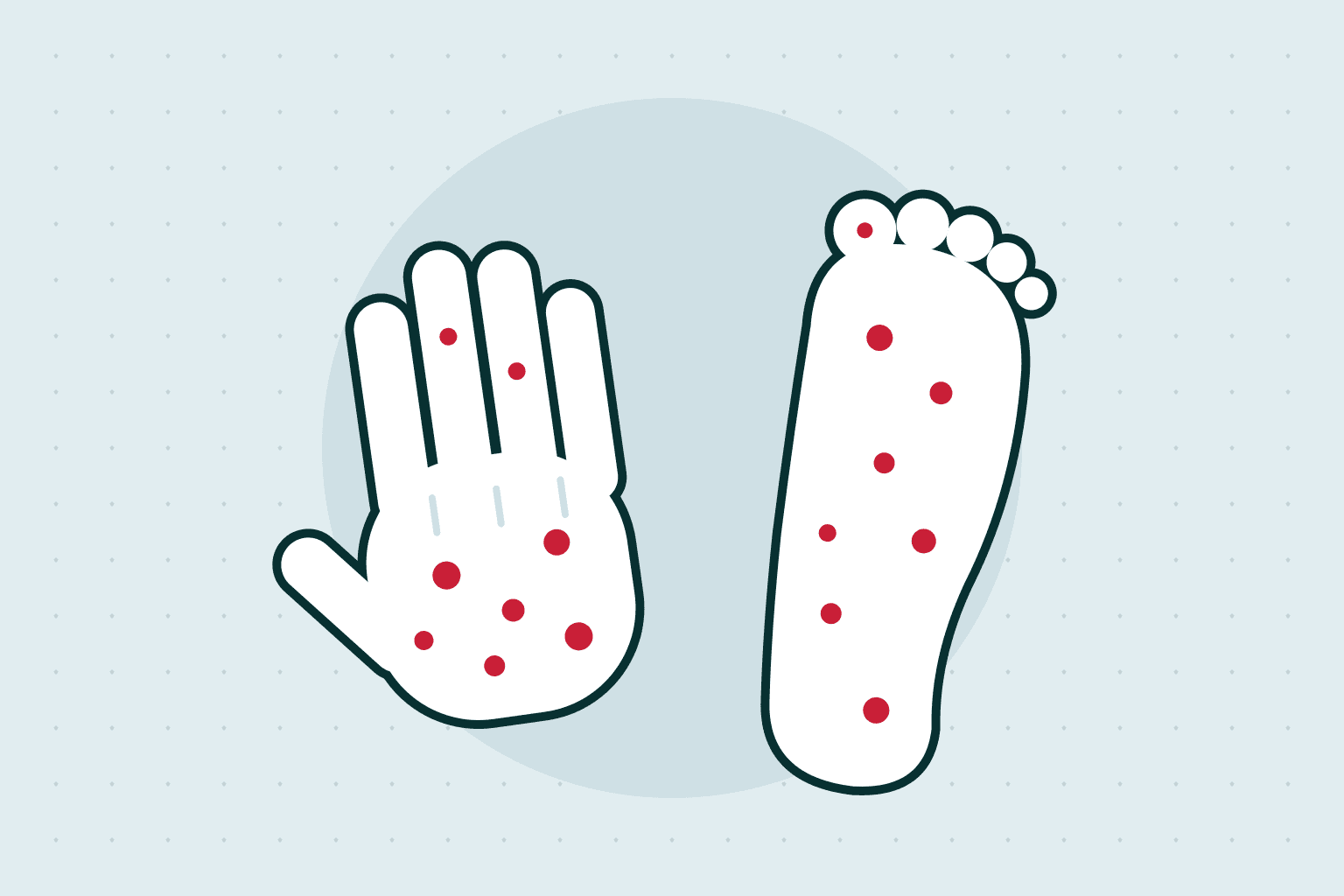
- The rash.Flat or slightly raised spots show up on the palms and soles. They can also appear on the buttocks, in the diaper area or around the groin, and they sometimes turn into blisters. On darker skin the spots can look less red.
- Recovery.Symptoms are usually mild and most people feel better in 7 to 10 days without any special treatment.
Adults can get it too. The symptoms are similar to a child's, and adults may also have a mild illness or none at all while still being able to pass the virus on.
How to help your child at home
- Pain and fever.Over-the-counter fever and pain relievers made for children can help. Ask your pediatrician or pharmacist which one fits your child's age and weight, and how much to give. Never give aspirin to a child or teenager.
- Drinks.Offer cool drinks often, even if only a little at a time. Cold milk is soothing. Fruit juice, soda and other acidic drinks sting the sores, so skip them.
- Food.Soft, cool foods such as yogurt, applesauce or mashed potatoes are easier to swallow. Avoid hot, salty or spicy food. A few days of eating little is not a problem as long as your child keeps drinking.
- Mouth care.Mouth gels, sprays and rinses are not suitable for every age. Ask a pharmacist or your child's provider before using one. Older children and adults can try rinsing with salt water.
- Skin.Keep the skin clean and dressed in loose clothing. Let blisters be rather than popping them.
Antibiotics do not help because this is a viral infection. The goal of care is comfort while the body clears the virus.
How to spot dehydration
Mouth sores can hurt so much that a child will turn down even water. Watch for these signs that your child is not getting enough fluid:
- much less urine than usual, or a diaper that stays dry for hours;
- dry skin, lips or mouth, and few or no tears when crying;
- dark urine;
- unusual irritability or sleepiness, or less alertness than normal.
If you see any of these, call your child's provider the same day. Sometimes a child needs help getting fluids back in.
How long it spreads and when to return to school
People are usually most contagious during the first week of illness. The virus can still be found in stool for days or weeks after symptoms go away, and some people spread it without ever having symptoms.
According to the CDC, children can usually go back to child care or school once they have no fever, feel well enough to take part, and are not drooling uncontrollably from mouth sores. Blisters do not need to be fully healed. During an outbreak a local health department may ask children to stay home longer, so check with your provider or the school if you are unsure.
How to prevent it from spreading
- Wash hands with soap and water often, especially after using the toilet, changing a diaper and before eating. Help young children do the same.
- Cover coughs and sneezes with a tissue and throw it away quickly.
- Clean toys, doorknobs and other surfaces that many hands touch.
- Do not share cups, cutlery or towels, and avoid kissing a child who is sick.
- Wash soiled bedding and clothing on a hot wash.
Pregnancy
The CDC advises anyone who is pregnant and may have been exposed to contact their doctor. Complications are rare. The NHS notes that the illness usually poses no risk to the pregnancy, but catching it shortly before birth can mean a newborn has a mild version, so tell your obstetric provider if you get sick near your due date.
When to see a doctor, and the red flags
Call your provider if symptoms have not improved after 7 to 10 days, if a high fever does not come down with fever medicine, if you see signs of dehydration, or if you are pregnant and think you have the illness.
Call 911 or go to an emergency department now if there is a seizure or convulsion. Seek care urgently, too, for neck, arm or leg pain, trouble breathing, or a child who is unusually drowsy or confused. These problems are rare, but they can point to complications.
How it is diagnosed and treated
A provider usually recognizes it from the pattern of mouth sores and rash on the hands and feet, so lab tests are not usually needed.
There is no specific antiviral treatment. Care focuses on over-the-counter fever and pain relief as advised by a doctor or pharmacist, plenty of fluids, and rest.
Questions and answers
Does my child need tests to confirm it?
Usually not. A doctor can tell from the look of the sores and rash. Tests are saved for unusual or severe cases.
Can you get it twice?
Yes. Several different viruses cause it, so having it once does not protect you against the others.
Is it dangerous for adults?
Most adults who catch it have a mild illness or no symptoms. The bigger issue is passing it to others, so wash your hands carefully while someone at home is sick.
Can my child take a bath?
A lukewarm bath or shower is fine. Pat the skin dry rather than rubbing, and leave the blisters alone.
Do antibiotics or antiviral medicines help?
No. Antibiotics only work on bacteria, and there is no medicine for this virus. Comfort care and fluids are the treatment.
Sources
- CDC — About Hand, Foot, and Mouth Disease
- CDC — How Hand, Foot, and Mouth Disease Spreads
- MedlinePlus — Hand-foot-mouth disease
- NHS — Hand, foot and mouth disease
Sources checked on 29 October 2026.