
Sleep · · 7 min read
Sleep hygiene: habits and bedroom tips for better sleep
Sleep hygiene is not a strict ritual or a trick for falling asleep on command. It is a set of repeatable conditions that help your body tell day from night: a steady wake-up time, a calmer evening, and a bedroom that supports sleep. Start with a couple of small changes, watch how you feel over a few weeks, and do not explain away symptoms such as loud snoring with pauses in breathing as simple tiredness.
In short
- A consistent bedtime and wake time every day, within about an hour on weekends, is the habit with the most support.
- A quiet, cool, dark bedroom makes it easier to stay asleep.
- Caffeine can last up to 8 hours, and alcohol and big late meals can get in the way of good sleep.
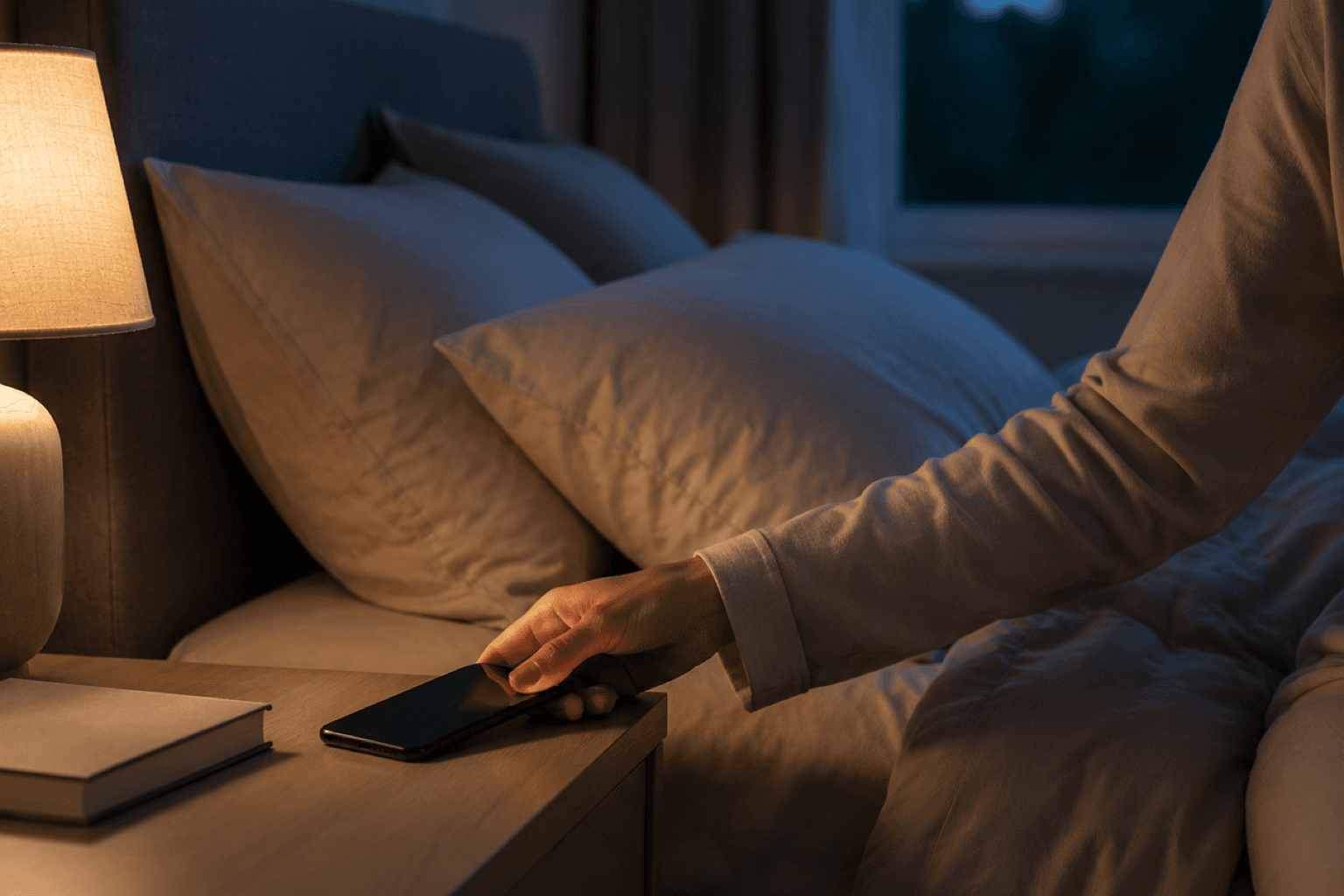
- Turn off screens at least 30 minutes before bed and use the last hour for quiet activity.
- Ongoing poor sleep, or signs of a sleep disorder, are worth a visit rather than more tips.
How much sleep adults need
For most adults the target is about seven to nine hours a night. The CDC lists seven or more hours for ages 18 to 60, seven to nine for ages 61 to 64, and seven to eight for those 65 and older. Children and teens need more: 9 to 12 hours at ages 6 to 12 and 8 to 10 hours at ages 13 to 17. Needs vary with age, health and activity, so treat these as guides, not scores to hit every single night.
Quality matters as well as quantity. Signs that you may need better sleep include trouble getting up in the morning, trouble focusing during the day and dozing off during the day. Poor sleep is linked with a higher risk of accidents, high blood pressure, heart disease, stroke, obesity, type 2 diabetes, anxiety and depression.
Start with a steady schedule
Go to bed and get up at the same time every day. The NHLBI suggests keeping weeknight and weekend schedules within about an hour of each other. Go to bed when you feel sleepy rather than only because the clock says so.
Natural light and outdoor time during the day also help. Shift workers can protect their sleep by blocking light and noise during daytime sleep, limiting shift changes and having caffeine only early in the shift.
Evenings: light, screens, food and drink
- Turn off electronic devices at least 30 minutes before bed, and avoid bright artificial light, such as from TVs or computer screens, in the last hour.
- Use that hour for quiet time; a hot bath or relaxation techniques can help.
- Skip heavy or large meals within a few hours of bedtime; a light snack is fine.
- Avoid caffeine and nicotine, including coffee, tea, soda and chocolate, in the afternoon and evening.
- Avoid alcohol before bed: it can make you drowsy but gets in the way of healthy sleep.
These are guidelines, not an exam. Begin by dimming lights and silencing notifications, then add more as you find what works.
Set up your bedroom
Aim for a room that is dark, quiet and cool, and a mattress and pillows that are comfortable. Curtains, blinds, an eye mask or earplugs can help. Remove distractions such as TVs, computers and phones.
Change one thing at a time and notice the effect. If the real obstacle is a noisy appliance, street light or stuffy air, fixing that beats buying expensive gadgets.
Daytime habits that support the night
- Exercise regularly, but avoid intense exercise right before bed.
- Spend time outside in daylight when you can.
- Keep naps short, no more than about 20 minutes for adults, and avoid napping late in the day, since late naps can make it harder to fall asleep.
- If you cannot fall asleep after about 20 minutes, get up and do something relaxing until you feel sleepy.
- Do not drive when sleepy.
Keep a simple sleep diary
For about two weeks, jot down roughly when you go to bed and get up, when you wake in the night, naps, exercise, alcohol, caffeine and any medicines. Providers often ask for exactly this information. You do not need minute-by-minute accuracy; the aim is to see patterns.
Be wary of using devices to judge your sleep if the numbers make you anxious. A simple diary and how you feel in the daytime tell you more.
When to see a doctor
Book a visit with your primary care provider if you regularly have trouble sleeping, if changing your habits has not helped, if you have had trouble for months, or if poor sleep makes it hard to cope with daily life. Mention any medicines and supplements you take.
Red flags: loud snoring with pauses in breathing or choking sounds, falling asleep unintentionally during the day, especially while driving or at work, or sleepiness together with fainting, new confusion or chest pain. Call 911 for severe breathing difficulty, chest pain or fainting, and do not drive.
What a clinician may offer
A provider will try to identify what is behind the problem, such as stress, medicines, other health conditions or another sleep disorder like sleep apnea. They can arrange a sleep study if a sleep disorder is suspected. Cognitive behavioral therapy for insomnia, in person or through an online program, may be offered.
Sleeping pills are rarely prescribed for insomnia because of serious side effects and the risk of dependence, and only for a short time and when other treatments have failed. Store-bought sleep aids may help for a week or two at most and can cause drowsiness, so check with your doctor first and never combine them with alcohol.
Questions and answers
Do I have to go to bed at exactly the same time every night?
Not to the minute. A realistic routine with a regular wake-up time matters more, and a weekend schedule within about an hour of your weekday one is a good target.
Can I catch up on sleep at the weekend?
Extra sleep can ease tiredness for a while, but big shifts between weekdays and weekends can make Monday harder. Protecting enough sleep on most nights works better, and the NHS advises against sleeping in after a bad night.
Do I have to give up my phone completely in the evening?
Not necessarily. The CDC suggests switching devices off at least 30 minutes before bed, and dimming the screen and turning off notifications earlier is a good first step.
Does alcohol help me fall asleep?
It can make you drowsy, but it is not a sleep aid and can worsen sleep quality. Avoiding it before bed is the usual advice.
When is tiredness a reason to get checked?
If sleepiness is constant, disrupts your day, makes you doze off without meaning to, or comes with snoring, breathing pauses or choking at night, ask for a medical evaluation.
Sources
Sources checked on 29 October 2026.