
Testing · · 9 min read
Thyroid symptoms: signs, tests and what to do next
Tiredness, feeling cold, weight gain and hair loss are the symptoms that most often make people suspect the thyroid, and sometimes they are right. But these symptoms are common and have many causes, and testing everything without a reason can bring worry and needless procedures. Here are the symptoms worth checking, the blood tests that usually come first and what a sensible plan looks like.
In short
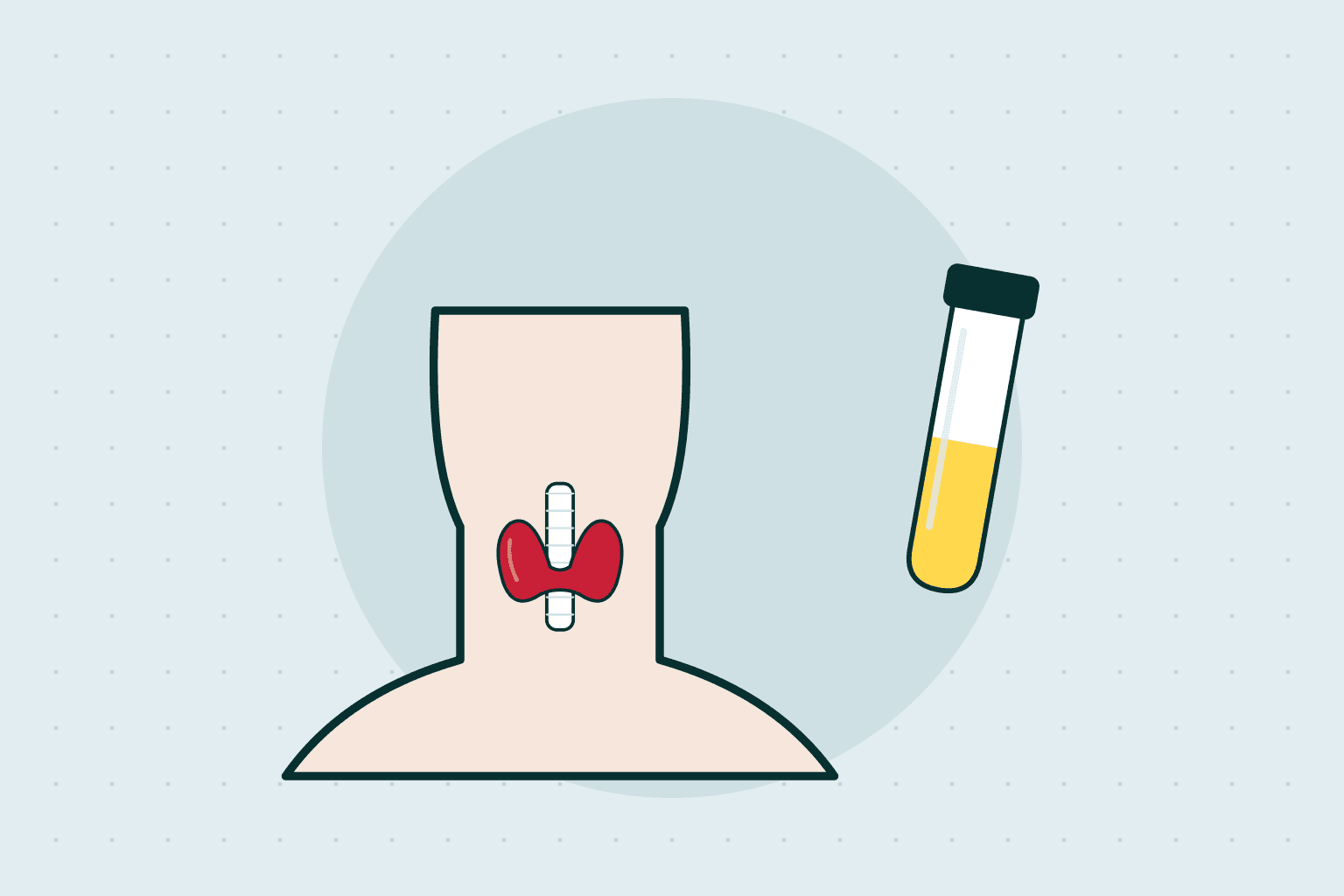
- The thyroid is a small, butterfly-shaped gland in the front of the neck that makes hormones controlling how your body uses energy.
- Symptoms alone cannot diagnose a thyroid problem, because they overlap with many other conditions. Thyroid blood tests, with a history and exam, make the diagnosis.
- An underactive thyroid (hypothyroidism) is most often caused by Hashimoto's disease, and an overactive thyroid (hyperthyroidism) by Graves' disease.
- Thyroid medicine for an underactive thyroid is usually taken long term, and it should never be stopped without a provider's advice.
- Large amounts of iodine from seaweed or supplements can cause or worsen thyroid problems, so ask before taking them.
What the thyroid does
NIDDK explains that thyroid hormones control how the body uses energy and affect nearly every organ, including the heart. MedlinePlus adds that they influence breathing, heart rate, weight, digestion and mood. That reach is why a thyroid problem can show up in so many ways, and why the signs are easy to blame on stress, age or sleep.
Underactive thyroid: when hormone runs short
NIDDK says hypothyroidism develops slowly, and symptoms may not appear for months or years. Women and people over 60 are more likely to develop it.
- Common signs: fatigue, weight gain, feeling cold, joint and muscle pain, dry skin, thinning hair or hair loss, constipation, a hoarse voice, and heavy or irregular periods.
- Low mood or poor concentration can also occur, as the NHS lists them.
- Fertility problems and a slowed heart rate are also possible, according to NIDDK.
- Causes: Hashimoto's disease, an autoimmune condition, is the most common. Others include thyroiditis, surgery or radiation to the thyroid, and certain medicines.
NIDDK stresses that many of these symptoms are common and do not necessarily mean a thyroid problem. A very rare emergency, myxedema coma, can follow severe untreated hypothyroidism, and it needs immediate hospital care.
Overactive thyroid: when there is too much
NIDDK lists the symptoms of hyperthyroidism as weight loss despite an increased appetite, a rapid or irregular heartbeat, nervousness, irritability, trouble sleeping, fatigue, shaky hands, muscle weakness, sweating, heat intolerance, frequent bowel movements and a swollen neck (goiter). Older adults may have different signs, such as loss of appetite or withdrawal, and may be mistaken for depression or dementia.
Graves' disease is the most common cause. Others are overactive nodules, thyroiditis, too much iodine and taking too much thyroid hormone medicine. Untreated, it can lead to an irregular heartbeat with a risk of stroke or heart failure, bone thinning and problems with the eyes.
Which tests come first
NIDDK says diagnosis is based on a medical history, a physical exam and thyroid blood and imaging tests, and that symptoms alone are not enough.
- Blood tests: the NHS says thyroid-stimulating hormone (TSH) and thyroxine (T4) are measured. MedlinePlus also lists free T4, T3 and thyroid antibody tests.
- Imaging: thyroid ultrasound and a thyroid scan, used when the blood tests or the neck exam call for it.
- Biopsy: a needle biopsy is used in some cases, usually for a nodule.
A reasonable order starts with the history and a blood test, with imaging added by your provider when there is a reason. This page does not interpret your own numbers: ask your provider what a result means for you.
Thyroid nodules
Nodules are lumps within the thyroid gland, according to MedlinePlus. Evaluation includes a thyroid ultrasound and, in some cases, a biopsy. NIDDK notes that overactive nodules are usually noncancerous and most often occur in older adults.
A lump found by chance is a reason for a calm, organized work-up with your provider, not for alarm. Ask what the ultrasound shows, whether a biopsy is needed, and how often to repeat the check.
Levothyroxine and other treatment
For an underactive thyroid, NIDDK says treatment is usually levothyroxine, a thyroid hormone medicine identical to the one a healthy thyroid makes. The NHS says you will usually need to take it for the rest of your life, with regular blood tests to check you are on the right dose.
- NIDDK says your provider may suggest taking it in the morning before eating. Ask your pharmacist how to space it from food, coffee and other medicines or supplements.
- NIDDK says blood is checked about six to eight weeks after starting and after any dose change, then less often once stable.
- Too much hormone can cause problems such as atrial fibrillation or bone loss, so never adjust it yourself.
- For an overactive thyroid, NIDDK lists beta-blockers for symptoms, antithyroid medicines, radioiodine therapy and surgery. A provider chooses among them by cause.
Iodine, pregnancy and food
NIDDK says the thyroid needs iodine, but large amounts from seaweed such as kelp or dulse, or from iodine supplements, may cause or worsen thyroid problems, especially in autoimmune thyroid disease. Some cough syrups also contain iodine. Ask your care team before taking any of them.
Pregnancy raises extra questions. NIDDK says untreated hypothyroidism can affect mother and baby, that thyroid medicine is safe in pregnancy, and that many women need a higher dose, so contact your provider as soon as you know you are pregnant. Pregnant people also need more iodine, and your provider can say how much.
When to see a doctor
See your provider if symptoms persist, especially with a family history of thyroid disease, earlier thyroid problems or treatment, or another autoimmune condition. NIDDK also lists high cholesterol and trouble getting pregnant as reasons to have your thyroid checked.
Red flags: call 911 for chest pain, a very rapid or irregular heartbeat with faintness, severe confusion or extreme drowsiness. If you take antithyroid medicine, NIDDK says to call your provider right away for a constant sore throat, fever or chills, yellowing of the skin or eyes, easy bruising, or a rash.
Questions to bring:
- Which blood tests do I need first, and do I need an ultrasound?
- Could my medicines or supplements be affecting my thyroid?
- If I take levothyroxine, when should I take it and when should I get my blood checked?
- What should I do if I am planning a pregnancy?
Questions and answers
Can symptoms tell me my thyroid is the problem?
Not reliably. NIDDK says symptoms alone are not enough, because fatigue, weight change and mood changes are common and have many causes. A blood test settles the question.
Should everyone get a thyroid ultrasound as a check-up?
Imaging is used alongside the history, exam and blood tests, not instead of them, according to NIDDK. Your provider orders it when there is a reason, such as a lump in the neck.
Why do I have to be careful about when I take levothyroxine?
Because a steady routine keeps your treatment predictable. NIDDK says providers may suggest taking it in the morning before eating, and your pharmacist can advise on timing with other medicines.
Is autoimmune thyroiditis dangerous in itself?
Hashimoto's disease is the most common cause of hypothyroidism, and NIDDK says hypothyroidism can usually be fully controlled with the prescribed medicine. What matters is whether your thyroid hormone is low, which a blood test shows.
Does the thyroid affect fertility and pregnancy?
Yes. NIDDK says hypothyroidism can bring fertility problems and, untreated, can affect mother and baby. Tell your provider if you are planning a pregnancy.
Sources
- NIDDK — Hypothyroidism (underactive thyroid)
- NIDDK — Hyperthyroidism (overactive thyroid)
- NHS — Underactive thyroid (hypothyroidism)
- MedlinePlus — Thyroid diseases
Sources checked on 29 October 2026.