
Symptoms · · 7 min read
Carpal tunnel syndrome: symptoms, causes and treatment
Waking at night with a numb, tingling hand and shaking it out to get the feeling back is the classic picture of carpal tunnel syndrome. It happens when the median nerve is squeezed at the wrist. Early on it often improves with a night splint and a change in how you use your hands, but if it is left alone for a long time the nerve can be damaged and the muscles at the base of the thumb can weaken.
In short
- The typical pattern is numbness, tingling or burning in the thumb, index and middle fingers, often worse at night.
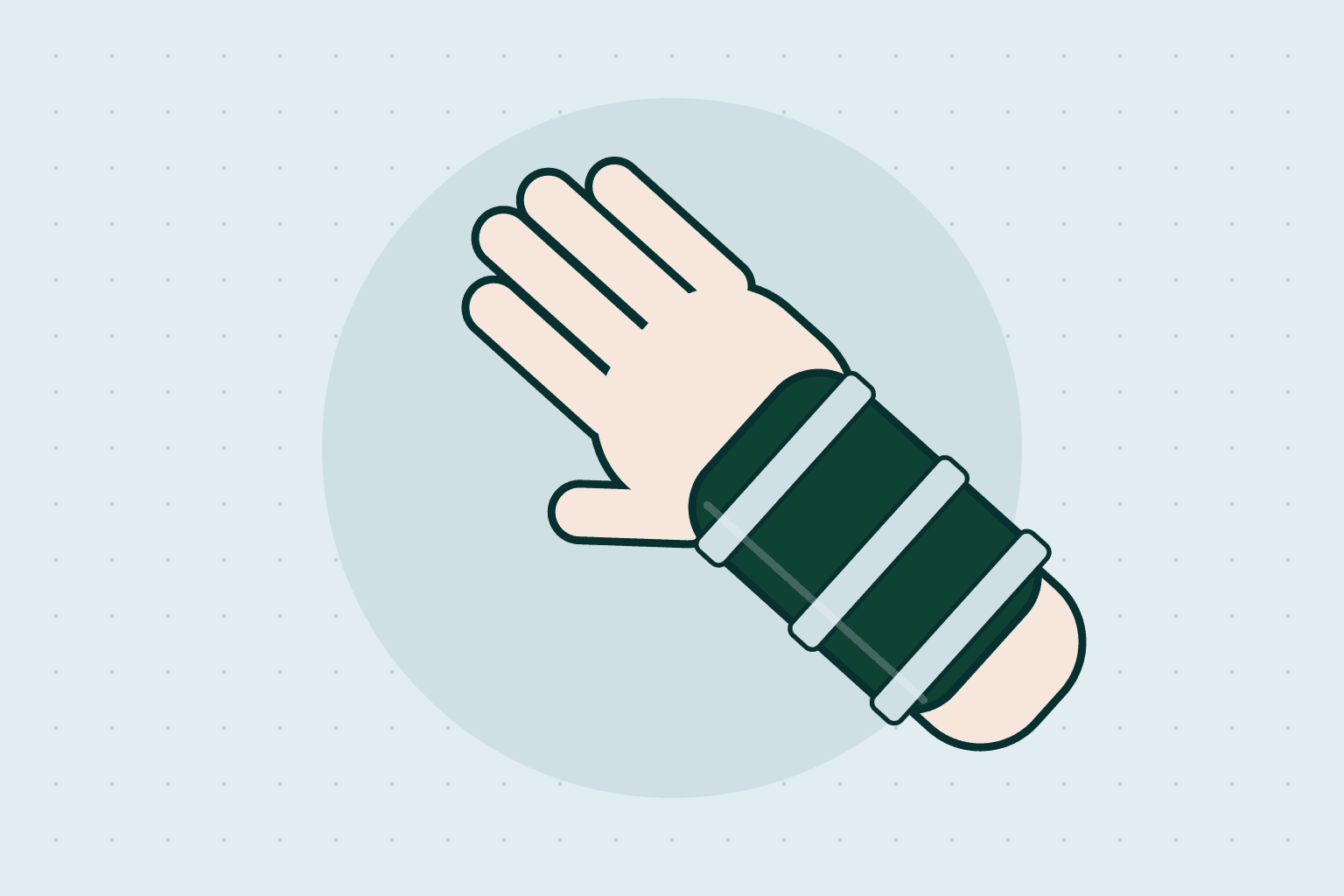
- A wrist splint worn at night keeps the wrist straight and is a first-line self-help step; it may take up to 6 weeks to notice a change.
- Typing is not a proven cause; repeated forceful gripping, awkward wrist positions and vibrating tools are better linked.
- Weakness in the thumb or constant numbness is a reason not to wait.
- Treatment ranges from splints and activity changes to steroid injections and, if needed, a short operation.
What happens in the wrist
The carpal tunnel is a narrow, rigid passage of ligament and bone at the base of the hand. The median nerve and the tendons that bend your fingers run through it. If swelling or thickened tendons increase the pressure, the nerve gets squeezed.
The median nerve gives feeling to the thumb, the index and middle fingers and part of the ring finger, which is why symptoms appear there. It also controls some small muscles at the base of the thumb.
Symptoms
- Numbness, tingling, pins and needles or burning, mainly in the thumb, index and middle fingers.
- Symptoms that start gradually, come and go, and are usually worse at night, with a need to shake out the hand or wrist.
- A feeling that the fingers are swollen, cold or weak.
- Later, symptoms in the daytime too, especially when using the phone, reading or driving.
- In long-standing cases, fingers that stay numb, trouble gripping small objects and weakness of the muscles at the base of the thumb.
Because the median nerve does not supply the little finger, numbness mainly in that finger points to a different cause.
Causes and risk factors
In many people no single cause is found. The common contributors are listed below.
- Pregnancy, menopause and other times of fluid retention or hormone change.
- Diabetes, thyroid problems, rheumatoid arthritis and other autoimmune diseases.
- Being overweight.
- Wrist injuries such as sprains or fractures.
- Repeated wrist bending or hard gripping, and use of vibrating tools.
- A close relative with the condition.
Carpal tunnel syndrome usually affects adults, and women are more likely than men to develop it. Researchers are unsure whether long-term typing or computer use causes it, while NIOSH lists force, repetition, awkward posture and vibration as workplace risk factors for musculoskeletal disorders in general.
What you can do at home
- Wear a night splint.It keeps the wrist straight and takes pressure off the nerve. Splints are sold in pharmacies and online, and it may take up to 6 weeks to feel better.
- Cut back on aggravating tasks.Reduce repetitive wrist bending and hard gripping, take breaks and vary your tasks.
- Keep the wrist neutral.Good posture and a neutral wrist position help, and so does arranging your workspace and tools to reduce strain.
- Try hand exercises.Evidence is limited, but they may help. Stretching and exercising the hands and wrists is also a general prevention tip.
- Mind pain relief.Over-the-counter pain medicines may ease pain for a short time but do not treat the cause. Use them as the label or your doctor says.
The condition sometimes resolves by itself within a few months, particularly when pregnancy is the cause.
When to see a doctor
See your primary care provider if symptoms are getting worse or not going away, if home treatment is not working, if numbness is constant rather than only at night, or if your hand feels weak, for example if you drop things. Do not wait if you notice the muscle at the base of your thumb shrinking.
Red flags, call 911: sudden numbness or weakness on one side of the body, trouble speaking, a drooping face or sudden vision changes, which can be signs of stroke, or a cold, pale hand with numbness after an injury.
How it is diagnosed
Diagnosis is usually based on your symptoms and an examination of your hand. A provider reviews your medical and family history and may order tests when the picture is unclear.
- Nerve conduction studies and electromyography.
- Ultrasound or MRI of the wrist.
- X-rays, to look for a broken bone or arthritis.
- Lab tests for conditions that can damage nerves.
Treatment options
Early treatment works best, and providers first address any underlying health condition. Beyond a splint and activity changes, there are two main next steps.
- Steroid injection: given if a splint does not help. It reduces swelling around the nerve, but symptoms can come back after a few months and another injection may be needed.
- Surgery: considered if symptoms worsen and other treatments fail. Under local anesthetic, the ligament over the carpal tunnel is divided to take pressure off the nerve. The operation takes around 20 minutes with no overnight stay, and returning to normal activities can take about a month.
Acupuncture and chiropractic care have not been shown to improve the condition, while yoga may help pain and weakness. Treatment during pregnancy is usually cautious, since symptoms often fade after delivery.
Questions and answers
Does typing cause carpal tunnel syndrome?
Researchers are unsure. Typing is not a proven cause, but a comfortable workstation is still worth setting up, and you should look at other risks such as pregnancy, diabetes or thyroid problems.
Why does it get worse at night?
Symptoms are usually worse at night and often ease during the day. Many people wake needing to shake out the hand, which is why a splint that keeps the wrist straight in bed is so often suggested.
Do I always need surgery?
No. Many people improve with a splint and changes to how they use the hand, and some cases settle within months. Surgery is considered when symptoms worsen and other treatments fail.
Can pregnancy cause it?
Yes. Fluid retention during pregnancy is a recognized cause, and pregnancy-related symptoms may improve by themselves within a few months after the baby arrives.
Is numbness in the little finger carpal tunnel?
Usually not, because the median nerve does not supply that finger. Mention it to your clinician, since the cause may lie elsewhere.
Sources
- NHS — Carpal tunnel syndrome
- MedlinePlus — Carpal Tunnel Syndrome
- NIAMS — Carpal Tunnel Syndrome
- NIOSH — Ergonomics and Musculoskeletal Disorders
Sources checked on 29 October 2026.