
Nutrition · · 6 min read
Omega 3 and healthy fats: what to eat instead of what
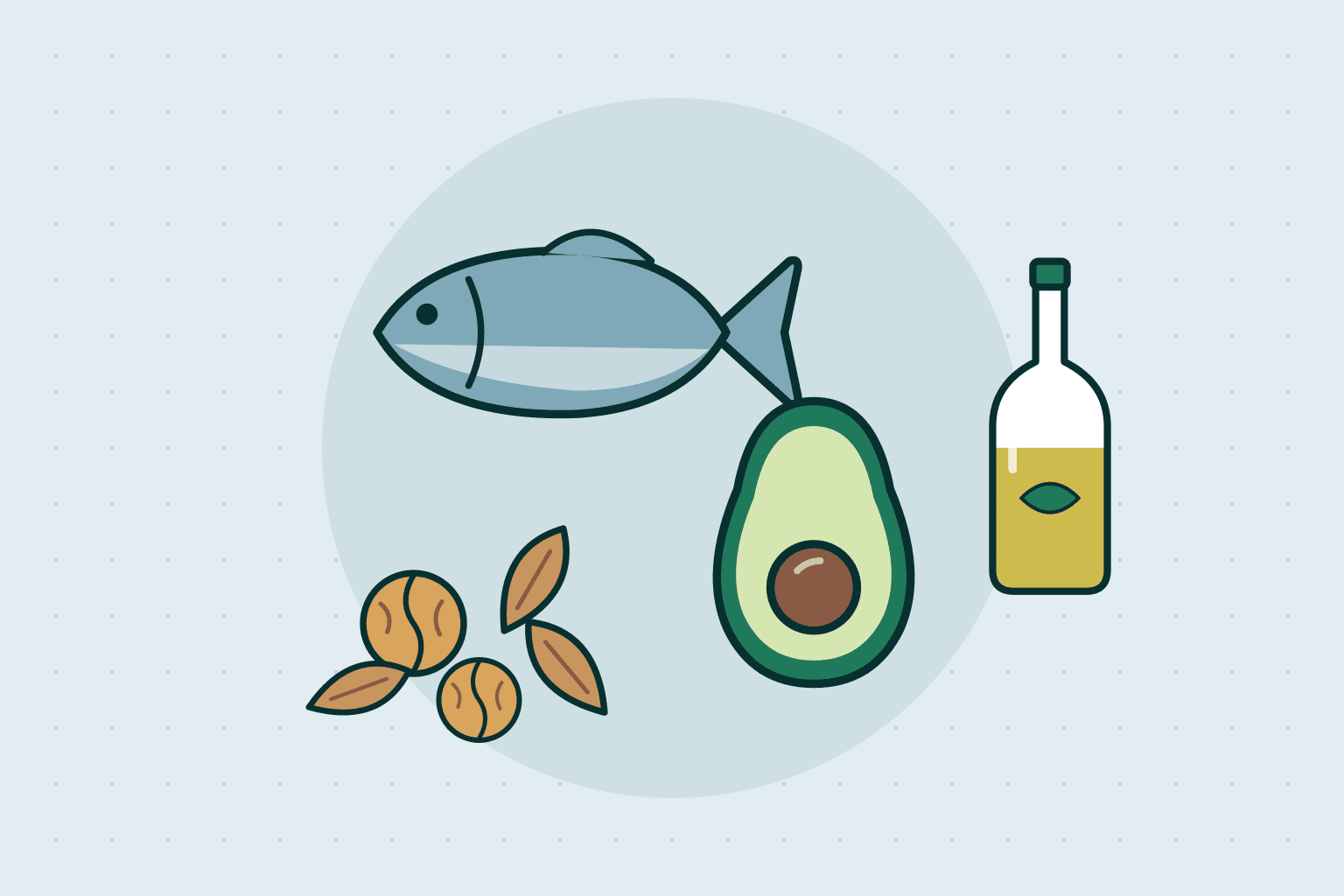
The useful move with fat is a swap, not a ban: less saturated fat from butter, fatty meat and palm or coconut oil, more unsaturated fat from plant oils, nuts, avocado and fish. The best-supported way to get omega-3 is food, mainly oily fish a couple of times a week, while supplements have a more limited track record. Industrial trans fat is the one fat with no known health benefit.
In short
- What helps is replacing saturated fat with unsaturated fat, not removing fat altogether.
- Industrial trans fat has no known health benefit and raises the risk of heart attack and death from heart disease.
- Oily fish is the richest source of long-chain omega-3. The NHS advises at least 2 portions of fish a week, with at least 1 of them oily.
- Plant foods such as flaxseed, walnuts and canola oil contain ALA, a different type of omega-3 from the EPA and DHA found in fish.
- Seafood's benefits are better supported than those of supplements, so food comes first.
Types of fat and what to swap
- Saturated fatFatty meat, butter, lard, hard cheese, cream, cakes, pastries, and palm and coconut oil. Too much raises LDL, the so-called bad cholesterol, which raises the risk of heart disease and stroke.
- Monounsaturated fatOlive and canola oil, avocado and some nuts. These help lower LDL while keeping HDL.
- Polyunsaturated fatIncludes omega-6 and omega-3, which the body cannot make itself. It also helps lower LDL.
- Trans fatFound in partially hydrogenated oils and in small amounts naturally in meat and dairy. It also raises cholesterol.
The advice is to cut down on fat overall and swap some saturated fat for unsaturated fat. Omega-6 comes from vegetable oils such as corn and sunflower and from nuts, and most people get enough of it.
Three kinds of omega-3
Omega-3 is a family. EPA and DHA are the types studied most, and they come from fish and other seafood. ALA is found in plant foods such as flaxseed, chia seeds, walnuts and soybean and canola oils.
Oily fish are the richest source of long-chain omega-3 fatty acids, which help prevent heart disease and support a baby's nervous system development during pregnancy and breastfeeding. Algal oil is a vegetarian source of DHA, and some products also contain EPA.
How much fish and which kinds
- The NHS advises at least 2 portions of fish a week, including 1 of oily fish.
- Oily fish include salmon, mackerel, sardines, herring and trout.
- In the United States, the Dietary Guidelines recommend at least 8 ounces of seafood a week on a 2,000-calorie diet, as cited by the FDA.
- Canned oily fish, such as sardines, is an easy option.
- Some white fish and shellfish contain omega-3, but in smaller amounts.
Mercury matters more in pregnancy and for children. The FDA lists king mackerel, marlin, orange roughy, shark, swordfish, bigeye tuna and Gulf of Mexico tilefish as fish to avoid, and lists salmon, sardines, cod, shrimp and canned light tuna among the best choices.
Fish oil capsules
Omega-3 supplements include fish oil, cod liver oil, krill oil, algal oil and flaxseed oil. The evidence is mixed. Some research suggests people with heart disease or high triglycerides may benefit, and one 2020 review found a slight reduction in coronary events. Supplements may lower triglycerides, but they do not appear to affect body fat or other blood fats. For stroke, seafood intake has been linked to a moderate reduction in risk, while supplements showed little or no effect on total strokes.
Side effects are usually mild: an unpleasant taste, bad breath, headache, heartburn, nausea or diarrhea. Cod liver oil also contains vitamins A and D, which can be harmful in excess. Tell your provider about any supplements, and do not change prescribed medicines on your own.
How to avoid trans fat
Trans fat raises the risk of heart attacks and death from heart disease and has no known health benefit. The WHO recommends that adults keep trans fat below 1 percent of total energy intake.
- Industrial sources: margarine, vegetable shortening, fried foods, and baked goods such as crackers, biscuits and pies.
- On labels, look for partially hydrogenated oil.
- Natural trans fat in meat and dairy from cows, sheep and goats is, according to WHO, as harmful as the industrial kind.
Practical swaps
- Swap butter on toast for avocado or a nut butter without added sugar.
- Have fish or beans in place of fatty meat for a few meals a week.
- Choose olive or canola oil instead of butter or lard for everyday cooking.
- Use walnuts or ground flaxseed on porridge or yogurt for plant omega-3.
- Read labels: lower-fat products can still be high in fat or calories, and the NHS uses 3 grams or less of fat per 100 grams as the cutoff for low fat.
Pregnancy and special situations
The FDA says pregnant or breastfeeding women should eat 2 to 3 servings a week from its Best Choices list, with a serving being 4 ounces, or 1 serving from the Good Choices list. The NHS adds that pregnant women should have no more than 2 portions of oily fish a week and should avoid fish liver oil supplements unless a doctor advises them, because they are high in vitamin A.
If you take blood thinners, have surgery planned or have a fish allergy, ask your provider before using any omega-3 product.
Questions for your provider
- Do I need an omega-3 supplement, or is fish enough?
- Is a supplement safe with my other medicines?
- How much should I cut saturated fat, given my cholesterol?
- Which fish are safest for me in pregnancy?
- Should I stop any supplement before a planned operation?
Questions and answers
Do I need fish oil capsules?
Most people can focus on fish and plant sources first. Supplements may help some people with heart disease or high triglycerides, which is a decision for your provider.
Does flaxseed replace fish?
It supplies ALA, a different type of omega-3 from the EPA and DHA in fish. If you eat no fish, algal oil is a vegetarian source of DHA.
Is coconut oil healthy?
Coconut oil counts as a saturated fat, the group the NHS advises cutting down on. It is not a substitute for unsaturated oils.
Is tuna an oily fish?
Not by the NHS definition: fresh and canned tuna do not count toward the oily fish portion. Tuna still has pregnancy limits, and bigeye tuna is on the FDA list of fish to avoid.
How do I spot trans fat on a label?
Check the ingredients for partially hydrogenated oil, especially in baked goods, crackers and fried foods.
Sources
- NHS — Different fats and nutrition
- NHS — Fish and shellfish nutrition
- FDA — Advice about eating fish
- WHO — Trans fat fact sheet
- NCCIH — Omega-3 supplements: what you need to know
Sources checked on 29 October 2026.