
Nutrition · · 9 min read
Mediterranean diet: what to eat and what research shows
The Mediterranean diet is an eating pattern rather than a diet in the usual sense: more plant foods, olive oil as the main fat, fish, and less red meat and sweets. Research links closer adherence to fewer heart events and lower mortality, and it asks for no calorie counting. Here is what it contains, how strong the evidence really is, and how to build it from the food available where you live.
In short
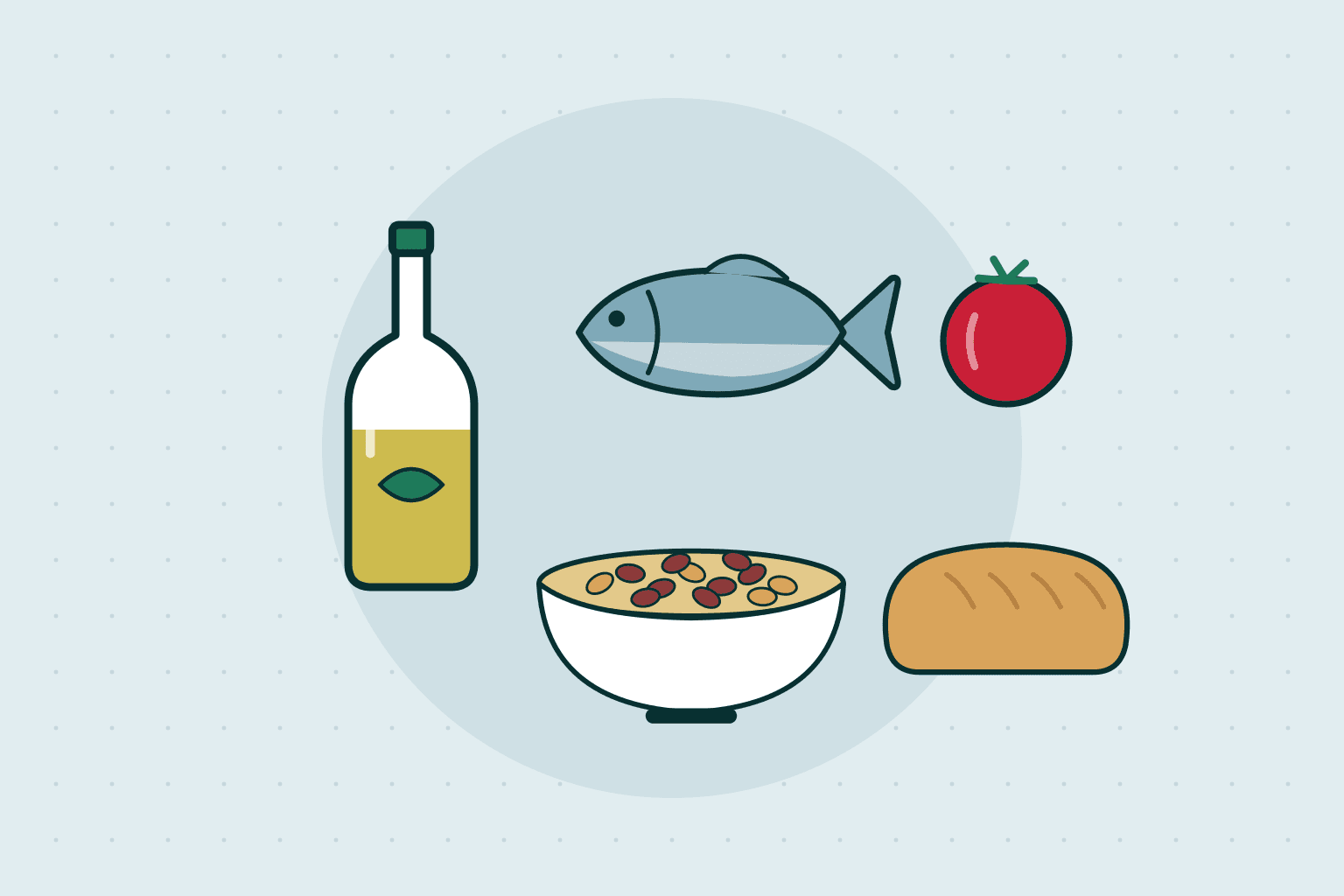
- The Mediterranean diet is a pattern built on vegetables, fruit, whole grains, legumes, nuts, fish and olive oil, with red meat, sweets and butter kept for occasional use.
- It does not forbid foods or ask you to count calories, which is much of its appeal.
- Higher adherence is linked to lower mortality and fewer cardiovascular events, though most of the evidence comes from observational studies and the randomized trials are fewer.
- The effect comes from the whole pattern, not from one food such as olive oil.
- You can follow the principles with local, seasonal, frozen and canned foods. Wine is not part of the plan you need to start.
What the diet is
MedlinePlus describes the Mediterranean diet as having fewer meats and carbohydrates than a typical American diet, with more plant foods and more monounsaturated fat. It is based on long-standing eating habits in Italy, Spain and other countries around the Mediterranean.
The details matter less than the direction: mostly plants, healthier fats, and fewer processed and sugary foods.
How a day and a week are built
- Most days: vegetables, fruit, whole grains, legumes (beans, lentils, peas), nuts, and olive oil as the main cooking fat.
- Fish and seafood: plenty, according to MedlinePlus. The NHS suggests at least two portions of fish a week, one of them oily, such as salmon, sardines or mackerel.
- Small amounts: lean meat and chicken.
- Rarely: red meat, sweets and desserts, eggs and butter, as MedlinePlus lists them.
- Seasoning: food is flavored simply, with herbs and spices, rather than with heavy sauces or gravies.
- Fats overall: the WHO advises replacing saturated fat with unsaturated fats such as olive oil, nuts and fish, and keeping free sugars below 10% of daily energy.
WHO guidance also puts legumes and whole grains, alongside vegetables and fruit, at the center of a healthy diet, and sets a target of at least 400 g of vegetables and fruit a day for adults.
What the research shows
A systematic review in the National Library of Medicine's PubMed Central found that higher adherence to the Mediterranean diet is associated with lower all-cause mortality and fewer cardiovascular events, in healthy people and in people who already had heart disease.
The strongest signals come from observational cohorts, which show association, not proof. The randomized trials, including PREDIMED, mostly showed benefit on combined outcomes such as heart attack, stroke and cardiovascular death, while some individual outcomes were not statistically significant.
MedlinePlus adds that the pattern may help keep blood sugar steadier and may lower cholesterol and triglycerides. It does not claim that any single food does the work, and neither should you: adding olive oil to an otherwise fast-food diet is not the same as changing the pattern.
Adapting it to local food and your budget
You do not need food from the Mediterranean. What matters is the structure, and your grocery store already stocks most of it.
- Vegetables: use whatever is in season and affordable. The WHO notes that fresh, frozen and canned all count if they have no added sugar or excess salt.
- Legumes: lentils, chickpeas, beans and dried peas are the WHO's suggested main carbohydrate sources, and the NHS calls them a good alternative to meat, low in fat and rich in fiber and protein.
- Fish: sardines and mackerel count as oily fish, as the NHS lists them.
- Grains: choose wholegrain bread, pasta, brown rice and oats over refined ones.
- Fats: olive oil is the traditional choice. The NHS also lists vegetable, rapeseed and sunflower oils as unsaturated options, used in small amounts because all fats are high in energy.
A four-week start
- Week 1.Add vegetables to lunch and dinner without removing anything yet, aiming for about half of the plate.
- Week 2.Eat legumes twice a week and swap part of your side dish for a whole grain.
- Week 3.Add fish twice a week, cook with vegetable oil instead of butter, and keep a handful of nuts as a snack.
- Week 4.Cut red and processed meat down, replace sugary drinks with water, and have fruit instead of dessert.
- After that.Keep the habits that came easily. A pattern you follow for years beats a perfect month.
What an ordinary day looks like
- Breakfast: oatmeal with berries and nuts, or eggs with vegetables and wholegrain toast.
- Snack: fruit with a handful of nuts, or plain yogurt.
- Lunch: beans or a whole grain, a large portion of vegetables, fish or poultry, dressed with oil and lemon.
- Dinner: a vegetable stew with lentils, or baked fish with vegetables.
- Drinks: water, tea, and coffee without added sugar.
Nothing here needs a special shopping trip or separate cooking, which is why families tend to manage it together.
Wine, weight and other caveats
- Wine: it is common in the traditional pattern, but MedlinePlus advises avoiding it if you are prone to overuse, are pregnant, are at risk for breast cancer, or have a condition alcohol could worsen. Nobody needs to start drinking for their health.
- Weight: olive oil and nuts are rich in energy, and MedlinePlus lists weight gain as one thing to watch.
- Iron and calcium: eating less meat can lower iron intake, so MedlinePlus suggests pairing iron-rich foods with vitamin C. With fewer dairy foods, ask your provider whether you need a calcium supplement.
When to talk with a professional
The pattern suits most people, but a change in diet is worth discussing if you have kidney disease, take a blood thinner such as warfarin, have diabetes treated with insulin or other medicines that can lower blood sugar, or have a food allergy to fish or nuts. Your provider can tell you what to adjust.
A registered dietitian can build the plan around your medical conditions, your budget and your culture. You can bring these questions:
- Is this pattern safe with my conditions and medicines?
- Do I need to watch particular nutrients, such as potassium or vitamin K?
- How can I add legumes if they upset my stomach?
- How much fish is right for me, and which types, if I am pregnant or planning a pregnancy?
Questions and answers
Do I have to use olive oil?
It is the traditional choice and the best studied, but the principle is to replace part of your saturated fat with unsaturated fat. The NHS also lists rapeseed, vegetable and sunflower oils for that role, in small amounts.
Do I have to drink wine?
No. Wine appears in the traditional pattern, but it is optional, and for some people it is best avoided. If you do not already drink, there is no reason to start.
Will it help me lose weight?
It is not a weight-loss plan by design. Fiber-rich plant foods can make meals more filling, but olive oil and nuts add energy, so portions still count if weight is your goal.
Is it expensive?
It can be done on a modest budget. Frozen and canned vegetables count, legumes are a staple, and oily fish such as sardines and mackerel counts toward your weekly portions.
How much fish should I eat?
The NHS suggests at least two portions a week, one of them oily. If you are pregnant, ask your provider which fish are suitable for you.
Sources
- MedlinePlus — Mediterranean diet
- World Health Organization — Healthy diet fact sheet
- NHS — The Eatwell Guide
- PubMed Central — Mediterranean diet for primary and secondary prevention of cardiovascular disease and mortality: an updated systematic review
Sources checked on 29 October 2026.