
Nutrition · · 7 min read
Fiber foods: how much you need and how to eat more
Dietary fiber is the part of plant foods the body does not fully digest. It adds bulk, helps prevent constipation and is linked with better heart and metabolic health. Adults are advised to aim for roughly 21 to 38 grams a day depending on age and sex, while Americans average about 16 grams. The easiest route is more beans, whole grains, fruit, vegetables and nuts, added gradually with plenty of fluids.
In short
- Fiber comes only from plants: whole grains, beans and lentils, fruit, vegetables, nuts and seeds.
- Adults and teens are advised to aim for about 21 to 38 grams a day. Americans average only about 16 grams.
- Fiber adds bulk to stool, helps prevent constipation and promotes fullness. Low-fiber diets are linked with higher rates of several chronic diseases.
- Add fiber a little at a time over a few weeks and drink plenty of fluids to limit gas, bloating and cramps.
- Eating a variety of plant foods covers both main types of fiber.
What fiber is and what it does
There are two main types. Soluble fiber absorbs water and forms a gel that slows digestion. It is found in oat bran, barley, nuts, seeds, beans, lentils, peas and some fruits and vegetables, and it can help lower cholesterol. Insoluble fiber does not dissolve in water. It adds bulk to stool and speeds food through the intestines, and it is found in wheat bran, vegetables and whole grains. Most high-fiber foods contain both, so variety matters more than counting types.
Fiber supports digestion, helps prevent constipation, promotes a feeling of fullness and can aid weight control. The NHS links diets high in fiber with a lower risk of heart disease, stroke, type 2 diabetes and bowel cancer. Low-fiber diets are linked with higher rates of irritable bowel syndrome, diabetes, obesity, cardiovascular disease and colon cancer.
How much do you need?
MedlinePlus says older children, adolescents and adults should aim for 21 to 38 grams a day, and NIDDK puts the adult range at about 22 to 34 grams depending on age and sex. The WHO advises at least 25 grams a day of naturally occurring fiber for adults. Americans currently average about 16 grams a day, so for most people the goal is to move upward rather than hit an exact number.
Young children cannot eat enough to reach adult levels, but offering whole grains, fruit and other high-fiber foods is still recommended. Older adults often fall short because they may lose interest in food, so a dietitian can help plan meals.
Where to find it
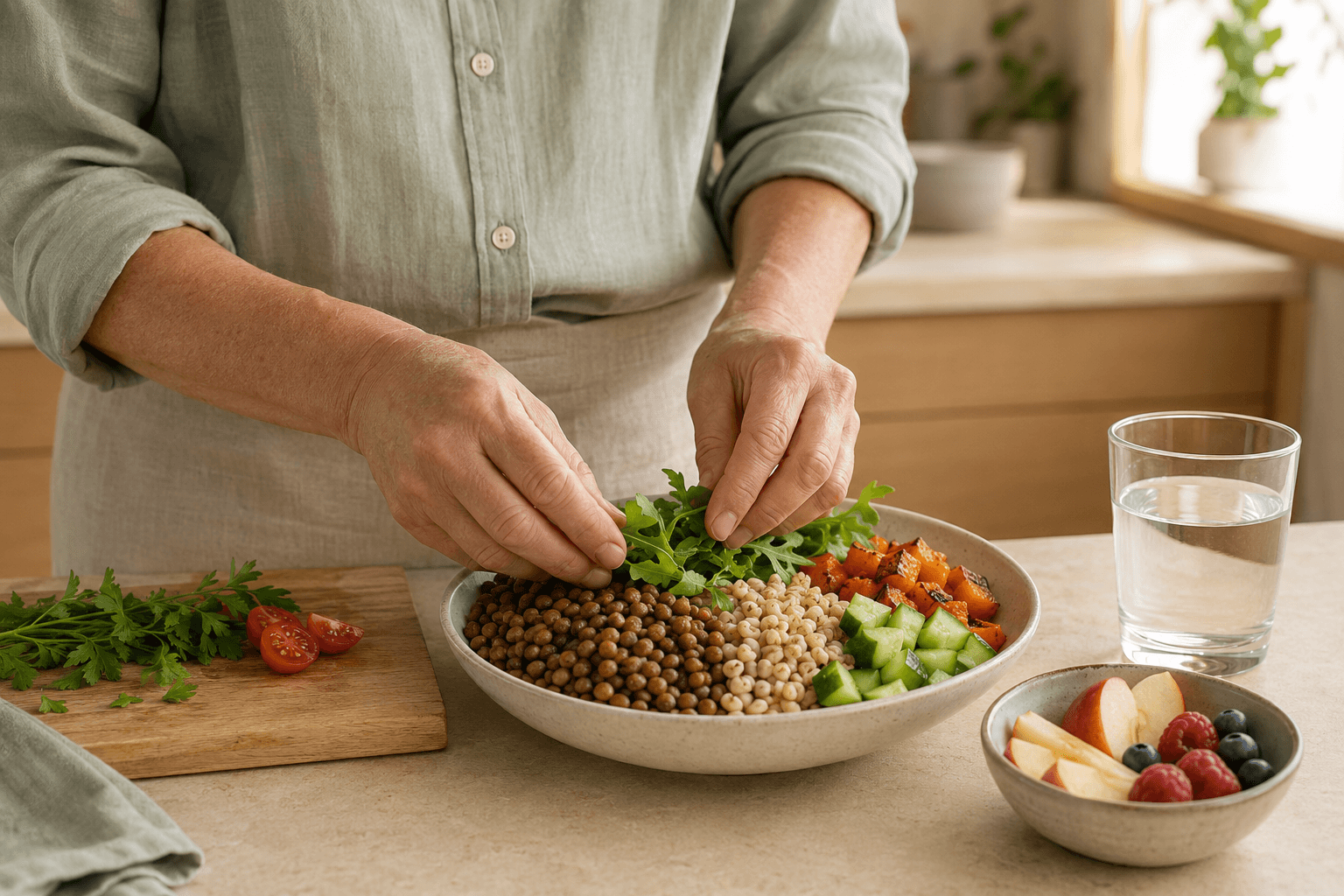
- Whole grains: oatmeal, bran cereals, whole-wheat bread and pasta, brown rice, bulgur.
- Legumes: lentils, beans, chickpeas, peas, soybeans.
- Fruit: berries, apples and pears with the skin on, oranges.
- Vegetables: carrots, broccoli, green peas, leafy greens, potatoes with skin on.
- Nuts and seeds: almonds, peanuts, pecans and others. Unsalted is best.
- Label reading: the NHS counts a food with 6 grams or more of fiber per 100 grams as high-fiber.
Leave the peels on fruit and vegetables where you can, since peeling removes fiber. Low-fiber choices include chips, fast food, meat and many processed or prepared foods.
How to add more without discomfort
- Start with breakfastSwap a refined cereal for oatmeal or a higher-fiber cereal, or add berries.
- Change one staple at a timeMove from white to whole-grain bread, pasta or rice, one product per week.
- Add beans and lentils to meals you already makeStir them into soups, stews and salads.
- Fill half the plate with plantsInclude vegetables at most meals, and keep fruit and vegetable sticks easy to reach as snacks.
- Drink more fluidsWater and other unsweetened fluids help fiber move through. About eight glasses of noncaloric fluids a day is the usual guidance, though your own needs depend on your size, health and activity.
Go slowly over a few weeks. A large, sudden increase can cause gas, bloating, cramps or diarrhea, which usually ease as your gut adjusts. Very high intake may slightly reduce absorption of minerals such as iron, zinc, magnesium and calcium, but this is generally minor because high-fiber foods tend to be rich in them.
Fiber and constipation
Fiber helps stools stay soft and bulky, but it works together with fluids. If you add fiber and drink too little, constipation can feel worse. If you take daily medicines, are on a restricted diet or have a digestive condition, ask your provider or a dietitian how to increase fiber safely.
When to see a doctor, and red flags
See your primary care provider if constipation or diarrhea lasts for weeks despite more fiber and fluids, if your bowel habits change and stay changed, if you notice blood in the stool or unexplained weight loss, or if fiber causes pain that does not settle. These can have causes that are not about diet.
Call 911 or go to an emergency room for severe abdominal pain, a swollen and hard belly, repeated vomiting, or if you pass a lot of blood or feel faint.
What a provider or dietitian can do
A provider can review your symptoms and medicines, and a registered dietitian can look at what you eat and plan meals that fit your tastes, budget and health conditions. Fiber supplements are not covered by the sources used here, so ask your provider whether one is right for you before starting.
- How much fiber should I aim for with my health conditions?
- Could any of my medicines affect digestion?
- Should I see a dietitian?
- Which symptoms should make me call you?
Questions and answers
Which has more fiber, fruit or whole grains?
It depends on the food, so there is no single winner. A variety of whole grains, legumes, fruit, vegetables and nuts is the aim, and leaving skins on fruit helps.
Why do I get gas when I eat more fiber?
Gut bacteria ferment some fiber, and a sudden big increase can cause gas, bloating and cramps. Adding fiber over a few weeks gives your gut time to adjust.
Does fiber help with weight control?
It adds bulk and helps you feel full, which can support weight control as part of an overall healthy diet.
Can too much fiber be a problem?
Very high intakes can reduce the absorption of some minerals, although this is usually minor. Mostly the practical limit is comfort: gas, cramps or loose stools tell you to slow down.
Is dried fruit a good fiber snack?
It contains fiber, but it is sticky and can contribute to tooth decay, so the NHS suggests having it with meals rather than between them.
Sources
- MedlinePlus — Fiber
- NIDDK — Eating, Diet, & Nutrition for Constipation
- NHS — How to get more fibre into your diet
- WHO — Healthy diet
Sources checked on 29 October 2026.