
Nutrition · · 7 min read
How much protein per day? What adults really need
Protein is everywhere now, from bars and yogurts to bottled water. Most adults in wealthy countries get enough, but older adults are a group where the question of how much is enough is actively debated. This article covers the standard daily figure in grams, the calorie-share range, why older adults may need more, what is known about kidneys and which everyday foods supply protein.
In short
- The long-standing reference figure for adults is 0.8 grams of protein per kilogram of body weight a day.
- Some researchers argue the figure is too low, especially for older adults.
- There is no evidence that dietary protein causes kidney disease in people with healthy kidneys.
- Protein works across the day, so balance counts more than any single meal.
- Plant foods can meet protein needs; animal products are not required.
How much you need in grams
The recommended dietary allowance is 0.8 grams per kilogram of body weight a day, an estimate of the minimum intake that meets the needs of nearly all healthy people. For a 70 kg adult that works out to 56 grams. It is a floor, not necessarily the best amount, and some researchers who reanalyzed the same data suggest 1.0 to 1.2 grams per kilogram for healthy young adults.
Another way to look at it is as a share of calories. MedlinePlus says healthy adults should get 10 to 35 percent of their calories from protein, and since each gram provides 4 calories, that is roughly 50 to 175 grams on a 2,000-calorie diet.
Older adults
Official recommendations for older adults are the same 0.8 grams per kilogram as for younger adults, but researchers who used a different measurement method estimate a requirement of 1.2 grams per kilogram for older men and women, about 40 percent higher. Older muscle also responds less strongly to protein, especially in small amounts, which may raise needs. The studies are small, and the authors say long-term trials are needed.
One trial in frail older adults found that resistance training improved strength and physical performance, and that muscle gains needed extra protein of about 1.4 grams per kilogram a day. In other words, protein and exercise work together, so ask your provider what amount suits you.
Spreading protein across the day
Many people eat little protein at breakfast and a big portion at dinner. MedlinePlus notes that the balance of essential amino acids across the whole day matters more than any single meal. Studies in older adults suggest that at least about 20 grams per meal is needed to stimulate muscle protein synthesis. A trial in middle-aged adults found that adding protein at breakfast and lunch increased lean mass, though researchers call per-meal distribution an area that needs more study.
- Look at breakfast first, since it is often the lowest in protein.
- Include a protein food at each meal rather than saving it for dinner.
- Do not worry about a precise time after a workout; the daily total matters more.
Does protein harm the kidneys?
A review published in Frontiers in Nutrition states that there is no evidence that dietary protein causes kidney disease, citing WHO and US Institute of Medicine statements. The picture changes if you already have chronic kidney disease. NIDDK explains that some people with the condition need moderate protein so that waste from protein breakdown does not build up in the blood, while too little protein can lead to malnutrition. Needs also change over time, and people on dialysis may need more.
If you have kidney disease, work with a dietitian or your health care professional to find the right amount and sources. Do not raise your intake on your own.
Where protein comes from
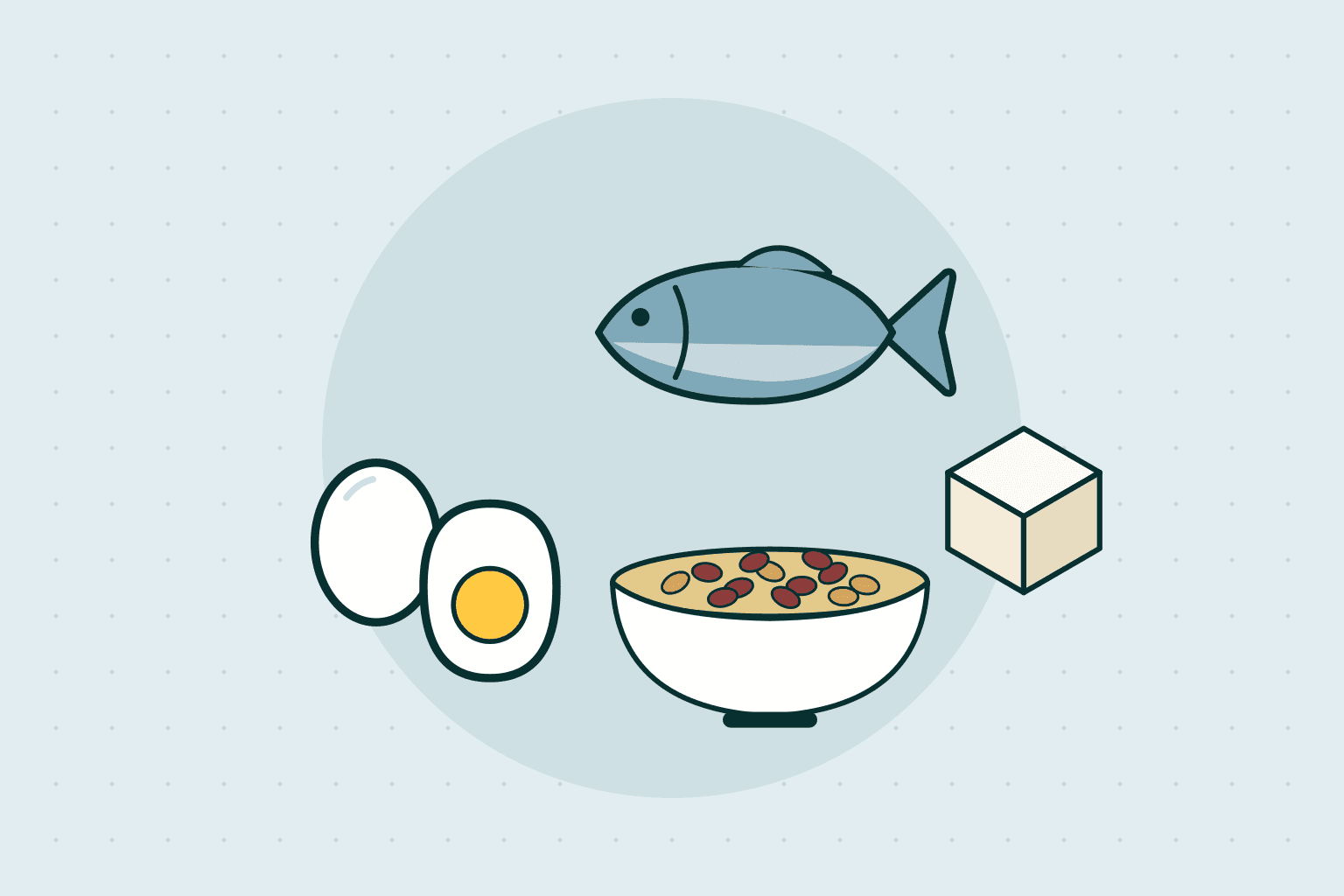
- Animal sources: meat, fish, poultry, milk and eggs.
- Plant sources: soy, beans, other legumes, nut butters, nuts, seeds and some grains such as wheat germ and quinoa.
- Whole grains contain more protein than refined grains.
- Roughly 7 grams of protein come from 1 ounce of meat, fish or poultry, one large egg, a quarter cup of tofu or half a cup of cooked beans or lentils.
MedlinePlus is clear that animal products are not required to meet protein needs. Protein quality scores do vary between sources, with milk, whey and soy scoring high and some plant sources such as pea, rice and almond scoring lower, so a varied diet through the day is a safe plan. Nuts also carry plenty of fat, so portion size matters.
Getting enough without special products
- Add eggs, yogurt or milk to breakfast.
- Keep canned beans and lentils on hand for salads and soups.
- Swap part of a side dish for legumes.
- Use tofu, nuts and seeds if you eat mostly plant foods.
- Check with a dietitian if your appetite is poor or you are losing weight without trying.
When to talk to a professional
Speak to your provider before making a big change in protein intake if you have chronic kidney disease, liver disease, gout or an inherited disorder of amino acid metabolism, or if you are pregnant. Also seek advice if you are losing weight or muscle without trying, feel unusually weak, have trouble chewing or swallowing, or an older relative has little appetite. In those cases the question is general nutritional support, not just protein grams.
Red flags: call 911 for chest pain, severe shortness of breath or sudden confusion, whatever you have eaten.
Questions for your provider or dietitian
- How much protein do I need, given my age and activity?
- Do I have any condition that limits protein?
- Should my kidney function be checked first?
- How can I spread protein through my day?
- How do I get enough protein on a vegetarian diet?
Questions and answers
Is 0.8 grams per kilogram the ideal amount?
It is described as an estimate of the minimum intake for nearly all healthy people, and some researchers say it underestimates needs. Ask your provider what is right for you.
Can I get enough protein without meat?
Yes. Soy, beans, lentils, nuts, seeds and some grains provide protein, and animal products are not required. Eating a mix of these through the day is the practical approach.
Does eating more protein damage healthy kidneys?
A published review found no evidence that dietary protein causes kidney disease. The caution applies to people who already have chronic kidney disease.
Is there a window after exercise when protein must be eaten?
The research does not point to a strict window. Total daily protein and its spread across meals matter more than the exact timing.
Sources
- MedlinePlus — Protein in diet
- NIDDK — Eating and nutrition for chronic kidney disease
- Phillips — Current concepts and unresolved questions in dietary protein requirements (Frontiers in Nutrition, NIH PMC)
- Courtney-Martin et al. — Protein requirements during aging (Nutrients, NIH PMC)
Sources checked on 29 October 2026.