
First aid · · 7 min read
Heart attack symptoms: warning signs and what to do
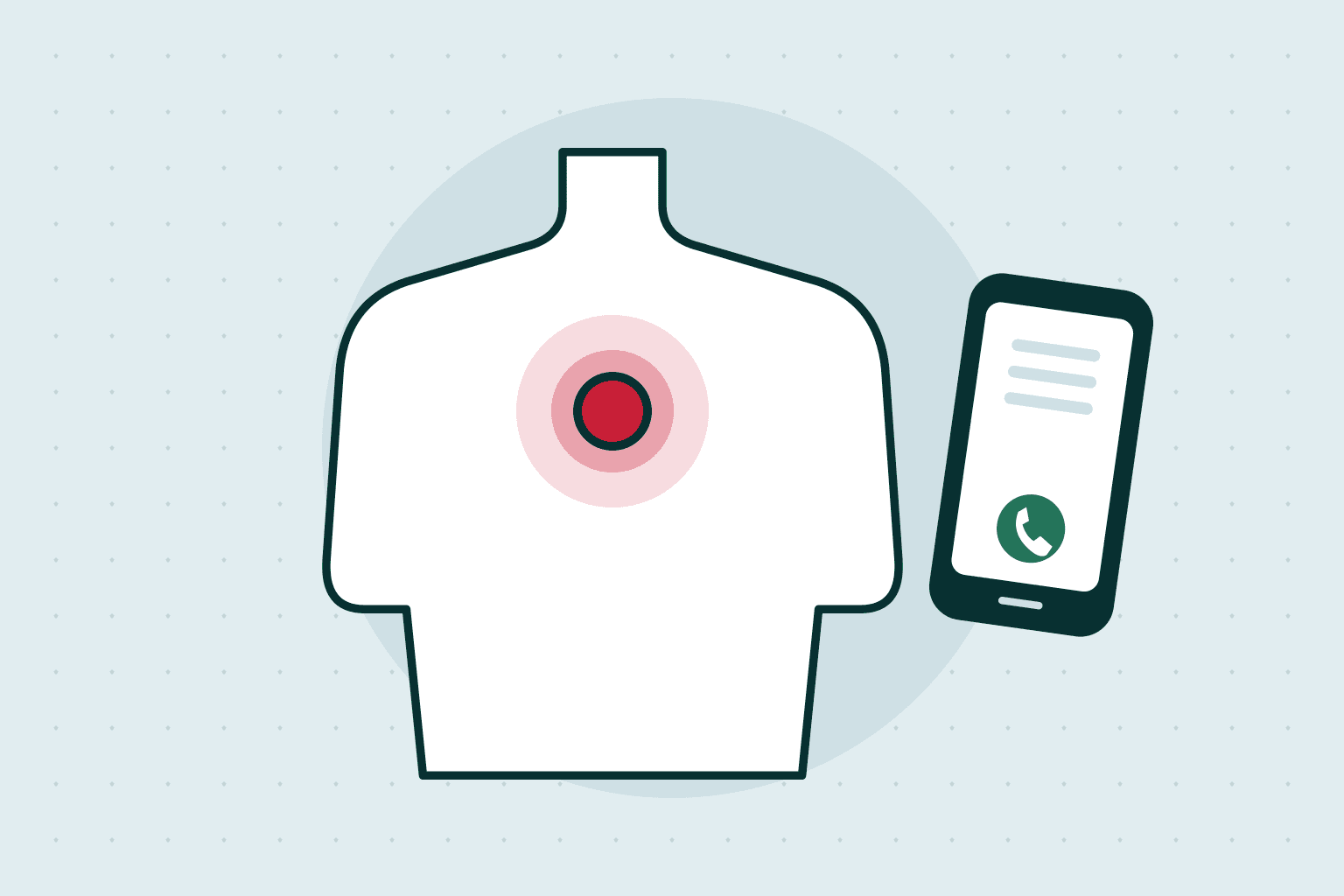
A heart attack happens when blood flow to part of the heart muscle suddenly becomes blocked, and the longer it stays blocked, the more heart muscle is damaged. The classic warning sign is pressure, squeezing or fullness in the center of the chest lasting more than a few minutes, but symptoms vary. If you or someone near you may be having a heart attack, call 911 right away, even if you are not sure.
In short
- The classic sign is pressure, squeezing, fullness or pain in the center or left of the chest that lasts more than a few minutes or comes and goes.
- Discomfort can also spread to the jaw, neck, back, shoulders or arms, and shortness of breath can come first.
- Women are more likely to have less typical symptoms such as unusual tiredness, nausea or vomiting.
- Call 911 immediately. Do not drive yourself, and do not wait to see if it passes.
- Take aspirin only if the 911 dispatcher or your doctor tells you to, and never if you are allergic.
What a heart attack is and why speed matters
A heart attack (myocardial infarction) is a medical emergency. Most are caused by coronary artery disease, in which plaque builds up in the arteries that feed the heart. If plaque ruptures, a clot can form and block the artery. Without quick treatment, the heart muscle starts to die.
The CDC says that someone in the United States has a heart attack about every 40 seconds. The sooner you reach an emergency room, the sooner treatment can begin, and many people who get prompt treatment survive and return to active lives. A heart attack is not the same as cardiac arrest, when the heart suddenly stops beating, although a heart attack can lead to it.
Warning signs
- Pressure, squeezing, fullness or pain in the center or left side of the chest, lasting more than a few minutes or going away and returning.
- Discomfort in the arms, shoulder, back, neck, jaw or upper stomach.
- Shortness of breath, which can start before the chest discomfort.
- A cold sweat, and pale, grey or blue-tinged skin or lips.
- Nausea or vomiting, or a feeling like indigestion or fullness.
- Feeling weak, light-headed or faint.
Symptoms vary from person to person. Do not wait for all of them to appear.
Signs that are easy to miss
Women, as the CDC and WHO note, are more likely than men to have shortness of breath, nausea or vomiting, back or jaw pain, and unusual or unexplained tiredness. A heart attack can also feel like indigestion, which is why many people wait too long before calling.
A practical rule: if you have risk factors and suddenly feel unexpectedly unwell, with sweating, breathlessness or faintness, treat it as a possible heart attack and call 911. It is better to be checked and told it was something else than to lose time.
What to do in the first minutes
- Call 911Say that you or the other person has chest pain and may be having a heart attack. Emergency crews can start care on arrival, and calling gets you care faster than driving.
- Stop and sit downStop what you are doing. Rest sitting or half-lying with your back supported.
- Follow the dispatcher on aspirinAspirin helps prevent further clots, but it is not safe for everyone. Take it only if the dispatcher or your doctor says to, and do not take it if you are allergic to it.
- Use prescribed nitroglycerin as directedIf your doctor has prescribed a nitroglycerin spray or tablets for angina, use them as directed. Do not use someone else's.
- Unlock the door and gather your informationHave a list of your medicines ready, and do not stay alone if you can avoid it.
- If the person collapses and is not breathing normallyTell the dispatcher, start CPR and use an automated external defibrillator (AED) if one is nearby, following its voice prompts.
Do not drive yourself to the hospital, and do not set off to drive a loved one when you can call 911 instead.
Who is at higher risk
Age, sex, family history and ethnicity cannot be changed. Other risk factors can be: smoking, high blood pressure, high cholesterol, diabetes, being overweight, physical inactivity, an unhealthy diet, harmful alcohol use and stress. The WHO lists stopping tobacco, cutting salt, eating more fruit and vegetables, regular exercise and treating high blood pressure, diabetes and high blood lipids among the most effective ways to lower the risk.
People who have had a heart attack have a higher risk of another, so ask your provider how to lower it.
When to see a doctor, and red flags
Call 911 immediately for chest pressure or pain lasting more than a few minutes, pain spreading to the jaw, neck, back or arms, breathlessness, a cold sweat, sudden unexplained weakness or faintness, or if someone has passed out and is not responding normally. Do this even if you are not sure it is a heart attack.
See your primary care provider promptly, not in an emergency, if you have chest discomfort that comes on with effort and settles with rest, if it is happening more often, or if you want your heart risk checked.
How a heart attack is confirmed
In the emergency room the first test is usually an electrocardiogram (ECG or EKG), done within minutes. Blood tests measure proteins such as troponin that are released when heart muscle cells are damaged, and they are often repeated. Imaging, such as a chest X-ray or CT scan, and sometimes a stress test, help show how well the heart is working and what caused the problem.
Treatment and recovery in general terms
Emergency treatment aims to restore blood flow quickly. It can include medicines that prevent or dissolve clots, nitrates to ease chest pain and the heart's workload, and oxygen. A procedure called percutaneous coronary intervention (PCI) opens the blocked artery, sometimes with a stent, and in some cases heart bypass surgery is needed.
Recovery usually includes cardiac rehabilitation and lifestyle changes. After a stent, people typically take anticlotting medicines for months to a year or longer, as prescribed. Never stop them on your own; ask your cardiologist first.
Questions and answers
Should I take aspirin if I think I am having a heart attack?
Ask the 911 dispatcher first. Aspirin is useful for many people but can cause bleeding and is not safe for everyone, including anyone allergic to it. Let the dispatcher or your doctor make that call.
Can a heart attack feel like heartburn?
Yes. Some people feel burning, fullness or indigestion rather than pressure. If it comes with sweating, breathlessness, pain spreading to the arm or jaw, or does not settle, call 911.
What is the difference between a heart attack and cardiac arrest?
In a heart attack, blood flow to the heart muscle is blocked, but the heart is still beating. In cardiac arrest the heart suddenly stops beating and the person loses consciousness, which needs CPR and a defibrillator at once.
Why shouldn't I drive myself to the hospital?
Emergency care can begin as soon as the crew arrives, and calling gets you care faster. You could also lose consciousness behind the wheel and endanger yourself and others.
Can I recover and live normally afterward?
Many people do, especially when treatment starts promptly. Follow your plan for medicines and cardiac rehabilitation, and raise any low mood or worry with your provider.
Sources
- CDC — Heart Attack Symptoms and Warning Signs
- NHS — Heart attack
- MedlinePlus — Heart Attack
- NHLBI — Heart Attack: Diagnosis
- NHLBI — Heart Attack: Treatment
- WHO — Cardiovascular diseases
Sources checked on 29 October 2026.