
Skin · · 7 min read
Psoriasis: symptoms, treatment and joint risks
Psoriasis is often mistaken for a cosmetic problem or a hygiene issue. It is a chronic, immune-mediated disease in which skin cells multiply far too quickly and build up as scaly, inflamed patches. It is not contagious, and it can affect more than the skin: some people develop joint problems and carry a higher risk of heart disease. Treatment can keep symptoms under control, so there is rarely a reason to put up with it.
In short
- Psoriasis is an immune-mediated skin disease, not an infection and not a sign of poor hygiene.
- You cannot catch it from someone else or pass it on.
- Some people also develop psoriatic arthritis, which needs its own treatment to protect the joints.
- Treatments range from moisturizers and creams to light therapy, pills, injections and biologic medicines, chosen by severity.
- Psoriasis is linked with heart disease, diabetes and low mood, so your overall health deserves attention too.
What is happening in the skin
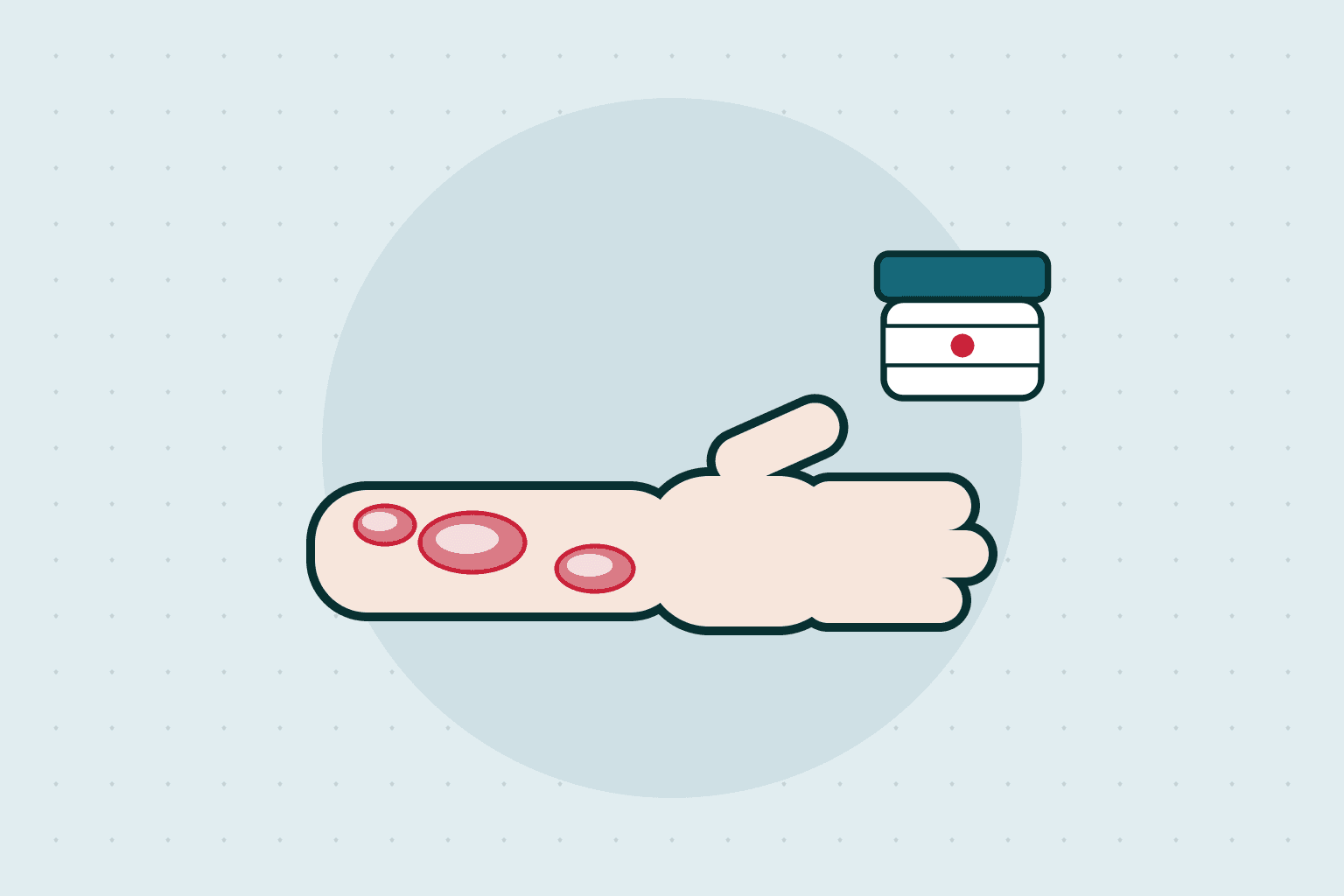
Normally skin cells rise to the surface over about a month. In psoriasis, the overactive immune system speeds this up so it happens in just days. The cells pile up and form thick red patches covered in silvery-white scales. The exact cause is not fully understood; genes and environment both play a role.
Anyone can develop psoriasis, though it is more common in adults than in children, and it affects men and women equally. It usually runs a course of flare-ups and calmer periods, and it can last a lifetime.
Types and where it shows up
- Plaque psoriasis, the most common type: raised red patches with silvery-white scales, often on the scalp, trunk, elbows and knees.
- Guttate psoriasis: small red dots on the torso or limbs, usually in children or young adults, often after a throat infection such as strep.
- Inverse psoriasis: smooth red patches in skin folds such as the groin, armpits or under the breasts, made worse by rubbing and sweat.
- Pustular psoriasis: pus-filled bumps surrounded by red skin, usually on the hands and feet, although one form can cover most of the body.
- Erythrodermic psoriasis: rare and serious, with red, scaly skin over most of the body.
Symptoms can include itching or burning, dry and cracked skin, and thick or pitted nails. Skin discomfort can also make sleep worse.
Triggers and risk factors
- Infections, especially strep throat and HIV.
- Stress and skin injuries such as cuts, scratches and scrapes.
- Smoking and alcohol.
- Obesity.
- Certain medicines, including some used for heart disease, malaria or mental health conditions.
- A family history of psoriasis.
- Dry skin and cold weather, with sunlight affecting people differently.
If you take a medicine you suspect is making things worse, do not stop it on your own. Tell the clinician who prescribed it.
Psoriatic arthritis: do not miss it
Some people with psoriasis develop psoriatic arthritis, an inflammatory joint condition that causes stiffness, swelling and pain. It can show up years after the skin symptoms. Untreated, it can cause irreversible joint damage, so early assessment matters.
- Joint stiffness, swelling or pain that keeps coming back.
- Swollen fingers or toes.
- Thick or pitted nails alongside joint symptoms.
- Stiffness that is worse in the morning and eases as you move.
If you notice any of these, tell your doctor. You may be referred to a rheumatologist, a specialist in joint disease.
More than skin deep
Psoriasis is associated with other conditions, including heart attacks and strokes, metabolic syndrome, type 2 diabetes, obesity, inflammatory bowel disease such as Crohn's disease, liver and kidney disease, and osteoporosis. It is also linked to anxiety, depression and low self-esteem, and the WHO describes how stigma and social exclusion can leave people feeling isolated.
In practice, this means keeping up with regular checkups, not smoking, working on weight if needed, and asking for help if your mood drops. Mental health support is part of good psoriasis care.
What you can do yourself
- Moisturize daily.Bathe in lukewarm water with a mild soap, then apply a heavy moisturizer while the skin is still damp.
- Do not pick at scales.Injury to the skin can bring on new patches.
- Look after your weight and diet.Obesity makes symptoms worse, and several studies suggest the Mediterranean diet can help.
- Stop smoking and limit alcohol.More smoking is linked to worse symptoms, and some studies link alcohol to flare-ups.
- Be careful with sun.A little sunlight can help some people, but too much can make psoriasis worse, so ask your doctor first.
- Protect your mind.Stress is a common trigger, and a support group or mental health professional can help.
When to see a doctor
See your primary care provider if you have patches that could be psoriasis, if your treatment is not working or causes side effects, or if joint pain, stiffness or swelling keeps returning. Low mood that lingers deserves a visit too.
Red flags, call 911 or go to the emergency room: skin that quickly turns red with white pus-filled bumps that join together, patches on the feet that turn yellow-brown and fill with pus, or red, scaly, pus-filled bumps on the fingertips or toes, especially with a fast heartbeat, a high temperature or feeling hot, cold or shivery. Do not drive yourself, and bring a list of your medicines.
How psoriasis is diagnosed
A doctor usually examines your skin, scalp and nails and asks about your symptoms, recent illness or stress, medicines, family history and any joint tenderness. Because psoriasis can look like other skin diseases, a small skin sample may be examined under a microscope.
Treatment options
There is no permanent fix, but treatment can control symptoms. The choice depends on the type, severity and location of psoriasis and on possible side effects, and combinations are common.
- Moisturizers.Used for washing and after bathing; they ease dryness and are a standard part of care.
- Topical medicines.Creams, ointments, lotions, foams or solutions, including corticosteroids, vitamin D based products, retinoids and coal tar, mostly for mild to moderate psoriasis.
- Light therapy.Ultraviolet light given by a doctor, usually when large areas of skin are affected.
- Systemic medicines.Pills or injections that act on the whole body, used for moderate to severe disease, as prescribed by a doctor.
- Biologics.Injected medicines that block specific immune molecules to reduce inflammation.
If one product has not helped after a long time, ask whether it is time to move up a step.
Some psoriasis medicines can be harmful in pregnancy, and pregnancy can also make symptoms worse. If you are pregnant or planning to be, ask your doctor to review your treatment before you change anything yourself.
Questions and answers
Is psoriasis contagious?
No. You cannot get it from touching, sharing a pool or using the same towel, and you cannot pass it on to anyone else.
Does psoriasis run in families?
Often, yes. A family history and certain immune-related genes raise the risk, but having relatives with it does not mean you will definitely develop it.
Can psoriasis go away on its own?
It tends to cycle between flare-ups and quieter spells, and a quiet spell can last a long time. Because it can return, ongoing care and trigger awareness are more reliable than waiting it out.
Does psoriasis affect the nails?
Yes. Nails may develop small dents or pits, and the NHS notes this as common. Mention nail changes to your doctor, especially if you also have joint pain.
Which doctor should I see?
Start with your primary care provider, who can prescribe some treatments or refer you to a dermatologist. A rheumatologist helps if joints are involved, and a mental health professional can help with stress, anxiety or low mood.
Sources
- NIAMS — Psoriasis
- NIAMS — Psoriasis: diagnosis, treatment and steps to take
- NHS — Psoriasis
- MedlinePlus — Psoriasis
- WHO — Global report on psoriasis
Sources checked on 29 October 2026.