
Nutrition · · 7 min read
Reduce salt intake: how to cut sodium without bland food
Cutting back on salt does not have to mean bland food or counting every grain. Start by finding where most of your sodium comes from, compare similar products, and let your taste adjust gradually. Most of it tends to arrive in packaged and restaurant food rather than from the salt shaker. Here is a practical route through shopping, home cooking and a conversation with your clinician.
In short
- Salt is sodium chloride; most of the sodium in the American diet comes from processed and restaurant foods.
- Compare similar products on sodium per serving, and check how many servings are in the package.
- Flavor with herbs, spices, garlic and lemon juice instead of salt, and take the shaker off the table.
- Too much sodium can raise blood pressure and the risk of heart disease and stroke.
- If you have high blood pressure, heart failure or kidney disease, ask your clinician for a personal sodium target.
Salt and sodium are not the same thing
Table salt is sodium chloride, about 40 percent sodium. Your body needs a little sodium to help regulate many functions, but too much can be harmful. Nutrition labels list sodium, not salt, so it helps to know the link.
A food that does not taste salty can still be high in sodium, so the label matters more than your tongue. WHO also notes that sodium naturally occurs in foods such as milk, meat and shellfish, but the large amounts usually come from processing.
How much is too much
WHO recommends that adults consume less than 5 grams of salt a day, about one teaspoon. It estimates that adults worldwide average about 11 grams, more than double that. The US federal recommendation is less than about the sodium in one teaspoon of table salt for teens and adults. CDC reports that Americans, on average, eat well above it.
Different bodies give slightly different numbers, so no figure from the internet is a personal prescription. People with high blood pressure or heart failure are often asked to cut back further, and providers may set a lower goal for some. If your clinician has given you a limit, follow that.
Why it matters
Too much sodium can raise blood pressure and increase the risk of heart disease and stroke. WHO links excess sodium mainly to high blood pressure and also associates it with gastric cancer, obesity, osteoporosis, Meniere's disease and kidney disease. Even people with normal blood pressure can benefit from eating less.
The aim is not zero sodium. It is to trim the excess while keeping a satisfying, balanced diet.
Read the label and compare
- Check the serving size.Look at sodium per serving and the number of servings per container. If you eat the whole package, multiply.
- Compare like with like.Set two versions of the same product side by side and choose the lower one.
- Look for the wording.Products labeled low sodium, reduced sodium or no salt added can help you find options, but check the numbers on the back.
- Scan the ingredients.Ingredients are listed by amount, so salt near the top is a signal to look for another product.
Cooking at home
- Eat mostly fresh, minimally processed foods, which are naturally lower in sodium.
- Take the shaker off the table and taste food before you add salt.
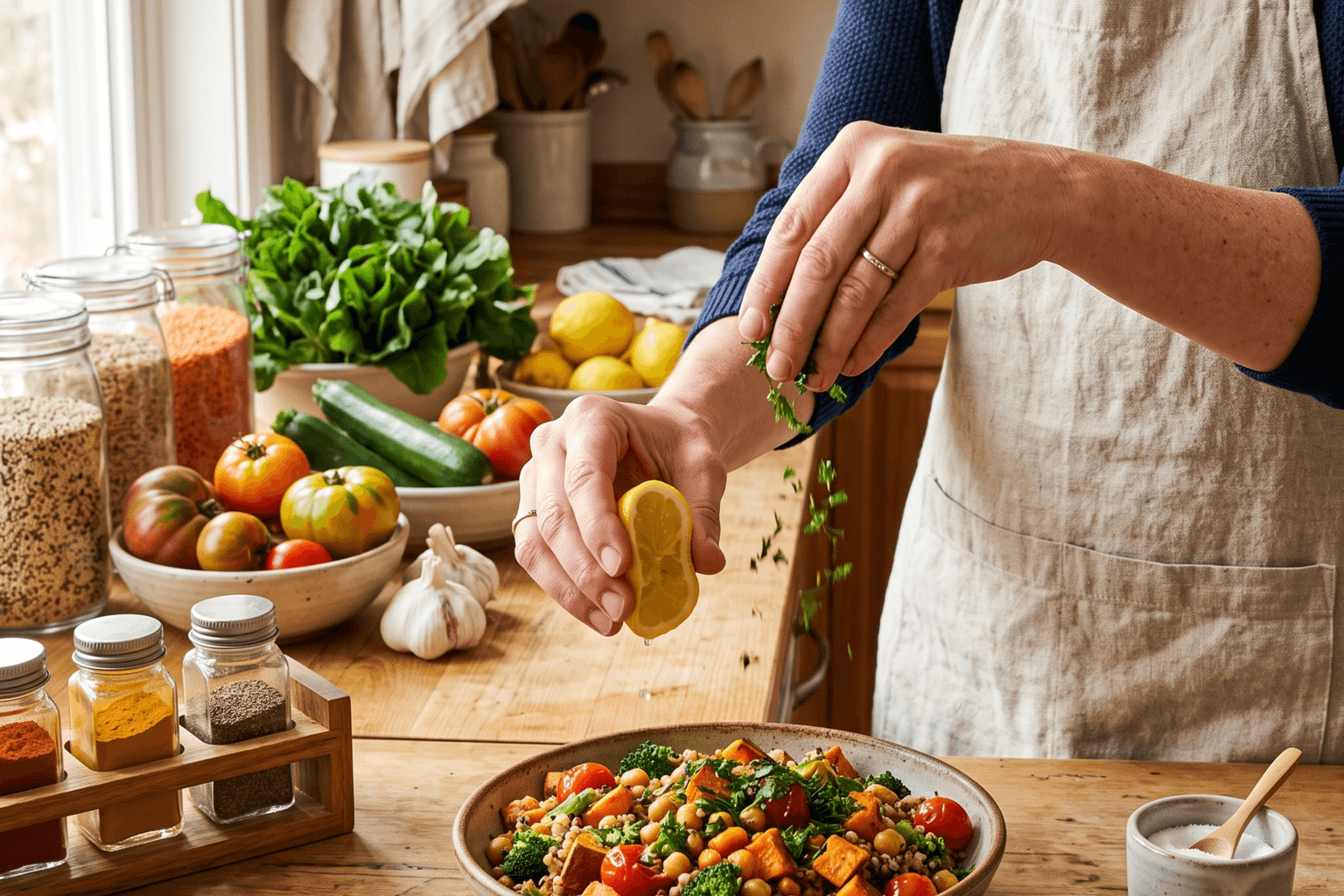
- Season with garlic, lemon or other citrus juice, vinegar, pepper, herbs and salt-free spice mixes. Choose garlic powder and onion powder over garlic salt and onion salt.
- Cook rice, pasta, beans and meats from dry or fresh when you can, and limit sauces, mixes and instant products.
- When you buy canned vegetables, pick versions with no salt or sauce added.
Taste adapts over time, so you do not have to go from familiar to salt-free in one step.
Eating out and ordering in
Ask for nutrition information before you order, if it is available, and choose a lower-sodium meal. Ask that no salt be added, and choose steamed, grilled, baked or broiled dishes without added sauce or cheese. Order vegetables without added salt or fruit as a side, split a meal, and treat takeout and fast food as an occasional choice.
Pick one manageable step each time: sauce on the side, a smaller portion, or a simpler dish. If one meal turns out saltier than usual, return to your usual pattern at the next one.
Who needs a personal plan
Talk to your clinician before making big changes if you have high blood pressure, heart failure, kidney or liver disease, or have been told to limit fluids. People in these groups may need advice based on their tests and medicines.
Salt substitutes often contain potassium. Ask your provider before using one, because extra potassium can be harmful with some medical conditions and medicines. Sea salt and other natural salts are still sources of sodium.
When to see a doctor
Make an appointment if your home blood pressure readings keep falling outside the range you agreed with your clinician, if swelling appears and persists, or if you feel noticeably worse. Bring a list of your medicines and supplements and a few familiar food labels.
Red flags, call 911: chest pain or pressure, severe shortness of breath, fainting, sudden confusion, a drooping face, weakness on one side of the body or trouble speaking. Do not try to explain these away with salt or wait for a diet change to work.
Questions and answers
Do I have to give up salt completely?
No. Your body needs a little sodium, and the practical goal is to reduce the excess. Any personal target depends on your health and your clinician's advice.
Is sea salt healthier than table salt?
Not in terms of sodium. Sea salt and other natural salts still contain it, so the amount you use is what counts.
Is taking the salt shaker off the table enough?
It is a good first step, but most sodium comes from processed and restaurant food, so look at your whole diet, including bread, sauces, snacks and ready meals.
Are salt substitutes safe for everyone?
No. Many contain potassium, which can be harmful with certain conditions or medicines. WHO suggests lower-sodium substitutes as an option, so check with your provider or pharmacist first.
Should I use iodized salt?
WHO advises that any salt you do use should be iodized, since iodine supports healthy brain development. Use less of it overall, though.
Sources
- WHO — Sodium reduction
- CDC — About Sodium and Health
- CDC — Tips for Reducing Sodium Intake
- MedlinePlus — Low-salt diet
Sources checked on 29 October 2026.