
Nutrition · · 7 min read
Ultra processed foods: what they are and how to cut back
Almost all food is processed in some way, and not all of it is unhealthy. Ultra-processed foods have gone through more processing and often contain ingredients not usually found in a home kitchen. Diets high in them are linked with obesity, type 2 diabetes and heart disease, and an NIH trial found that people ate about 508 more calories a day on an ultra-processed diet. Eating fewer of them, and choosing more whole foods, is a practical goal.
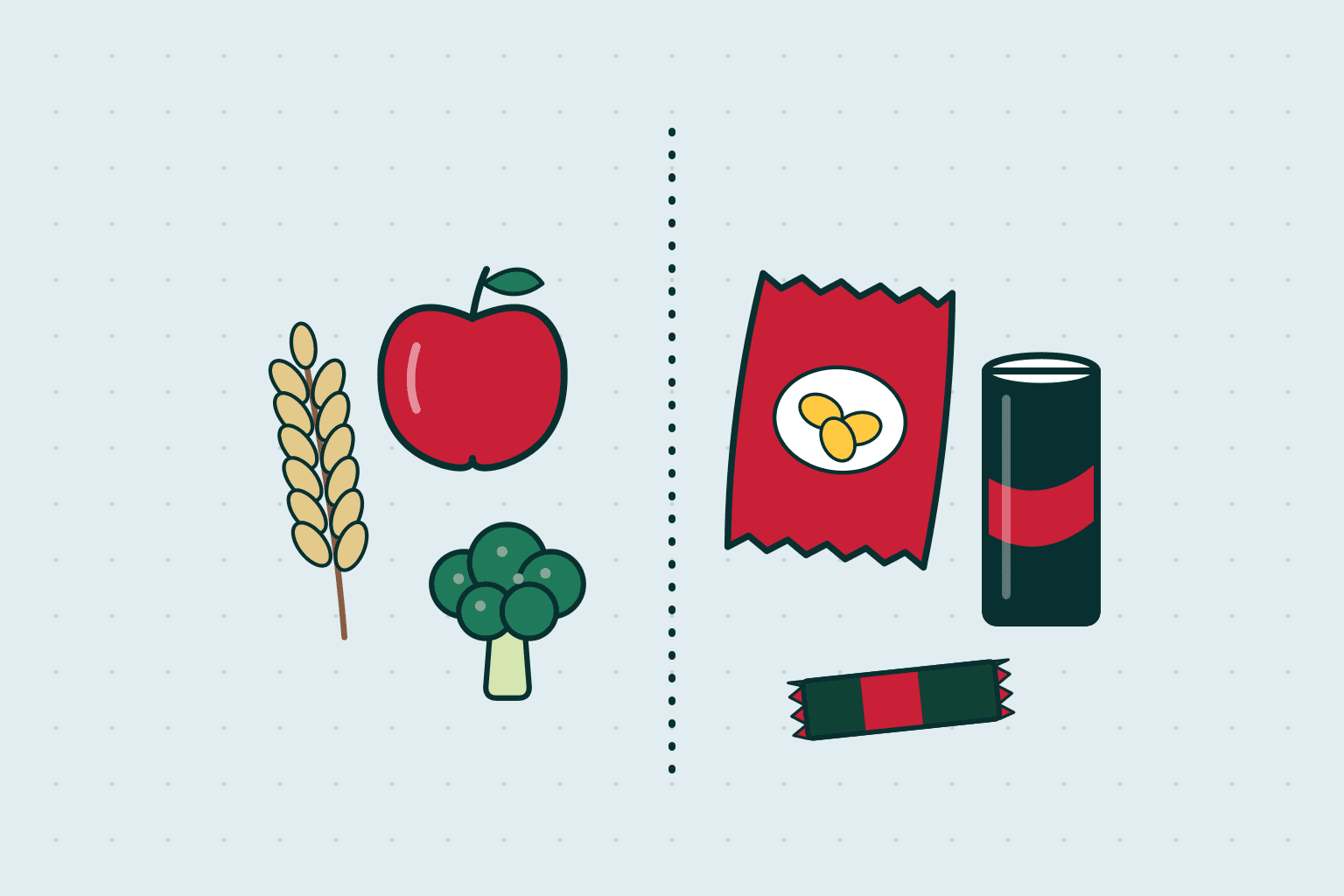
In short
- Almost all foods are processed in some way. Processing can make food safer, longer-lasting, tastier or more convenient.
- Ultra-processed foods have been through more processing and often contain preservatives, sweeteners and emulsifiers.
- Many are high in calories, saturated fat, salt or sugar, and diets high in them are linked with obesity, type 2 diabetes and heart disease.
- In an NIH trial, people on an ultra-processed diet ate about 508 more calories a day and gained weight.
- Most people benefit from eating fewer of them, less often and in smaller amounts, and building meals around whole foods.
What counts as ultra-processed
The NHS explains that processing is not bad in itself: pasteurized milk, tinned vegetables and frozen foods are processed too. Ultra-processed foods (UPFs) go further. They often contain ingredients that are not typically used at home, such as preservatives, sweeteners and emulsifiers.
- Sweetened drinks and soda.
- Chips, packaged cakes and cookies, ice cream, candy and chocolate.
- Some ready meals, packaged meat pies and similar products.
The line is not always sharp. Some UPFs fit into a healthy diet, such as wholemeal sliced bread, higher-fiber cereals and baked beans. The label tells you more than the word "processed" does.
What the research shows
The NHS says diets high in UPFs are linked with obesity, type 2 diabetes and heart disease, but it is not clear whether the processing itself or the fat, salt, sugar and calories cause these risks. The WHO likewise notes that diets with many highly processed foods are linked with poorer health outcomes and advises limiting foods high in unhealthy fats, free sugars and sodium.
Processed meat deserves its own mention. The NHS says eating a lot of processed and red meat is linked with a higher risk of bowel cancer, which is one more reason to treat sausages, bacon and similar products as occasional foods rather than daily staples.
The best-known experiment is an NIH trial published in 2019 in Cell Metabolism. Twenty adults lived in a clinical center for 28 days, spending 14 days on an ultra-processed diet and 14 days on an unprocessed diet, in random order. The meals were matched for calories, sugar, sodium, fiber and macronutrients, and participants could eat as much as they wanted. On the ultra-processed diet they ate about 508 more calories a day, ate faster and gained about 2 pounds (0.9 kg); on the unprocessed diet they lost about the same amount.
The authors note limits: only 20 people, a short study in a hospital setting, and no way to tell what in these foods drives the extra eating. They also point out that cooking from scratch takes time, skill and money, which any advice should respect.
Reading labels
The Nutrition Facts label shows calories and servings per container, plus fat, fiber, sodium and sugars, including added sugars. Use it to compare products and pick the ones with less added sugar and sodium. A long ingredient list full of items you would not keep in your kitchen is a hint that a food is ultra-processed.
How to eat fewer of them
- Start with drinksLimit sugar-sweetened drinks. Water is a better choice.
- Swap snacksChoose whole foods such as fresh fruit, baby carrots or plain low-fat yogurt over chips, cakes and cookies.
- Make the better choice the easy oneKeep foods high in fat, added sugar or salt out of your home, workplace and car, and keep fruit and vegetables visible.
- Build meals on whole foodsThe WHO recommends vegetables, fruit, legumes, whole grains and nuts as the base of your diet.
- Keep the useful onesYou do not need to give up wholemeal bread, higher-fiber cereal or tinned beans. Look at the label instead of banning a category.
A few habits make the shift easier to keep. Plan your meals and snacks ahead so you are not choosing when hungry. Read the label for added sugar and sodium before you buy. Eat more slowly, because in the NIH trial people ate faster on the ultra-processed diet. Treat treats as treats: enjoy them less often and in smaller portions rather than banning them, and ask for smaller portions when eating out.
When to see a doctor, and red flags
See your primary care provider or a registered dietitian if you have diabetes, kidney disease, high blood pressure or another condition that affects how you should eat, if you have lost or gained weight without trying, or if food feels hard to control or you cannot stop thinking about it. They can help you plan changes that are safe for you.
Call 911 for chest pain, trouble breathing, swelling of the lips or tongue after eating, or fainting. These are not diet problems and need emergency care.
What a provider or dietitian can do
There is no test for ultra-processed food intake. A provider can review your diet, weight, blood pressure, blood sugar and cholesterol, and a registered dietitian can tailor a plan to your budget, schedule and cooking skills.
- Which changes would matter most for my health?
- How can I eat well on my budget and schedule?
- Are any of my usual convenience foods a good fit?
- Should I get my blood sugar, blood pressure or cholesterol checked?
Questions and answers
Are all processed foods unhealthy?
No. Many everyday foods are processed, including frozen vegetables and pasteurized milk. The concern is mostly with products high in calories, saturated fat, salt or sugar.
Does the research prove ultra-processed food causes weight gain?
A small, short NIH trial found more calories eaten and weight gain on an ultra-processed diet, which supports the link. Larger observational data show associations, and it is not yet clear whether the processing or the nutrients are responsible.
Do I need to avoid them completely?
No. The NHS suggests having the less healthy ones less often and in smaller amounts, while some, such as wholemeal bread, can fit a healthy diet.
What is the easiest first step?
Replace sugary drinks with water, then swap one packaged snack a day for fruit, nuts or plain yogurt.
Is cooking at home the only answer?
It helps, but time and money matter too. Simple meals built from whole foods, tinned beans or frozen vegetables count.
Sources
- NHS — What are processed foods?
- Hall K. D. et al., NIH — Ultra-processed diets cause excess calorie intake and weight gain, Cell Metabolism, 2019
- WHO — Healthy diet
- NIDDK — Healthy eating tips for adults
Sources checked on 29 October 2026.