
First aid · · 7 min read
Burn first aid: what to do and what to avoid
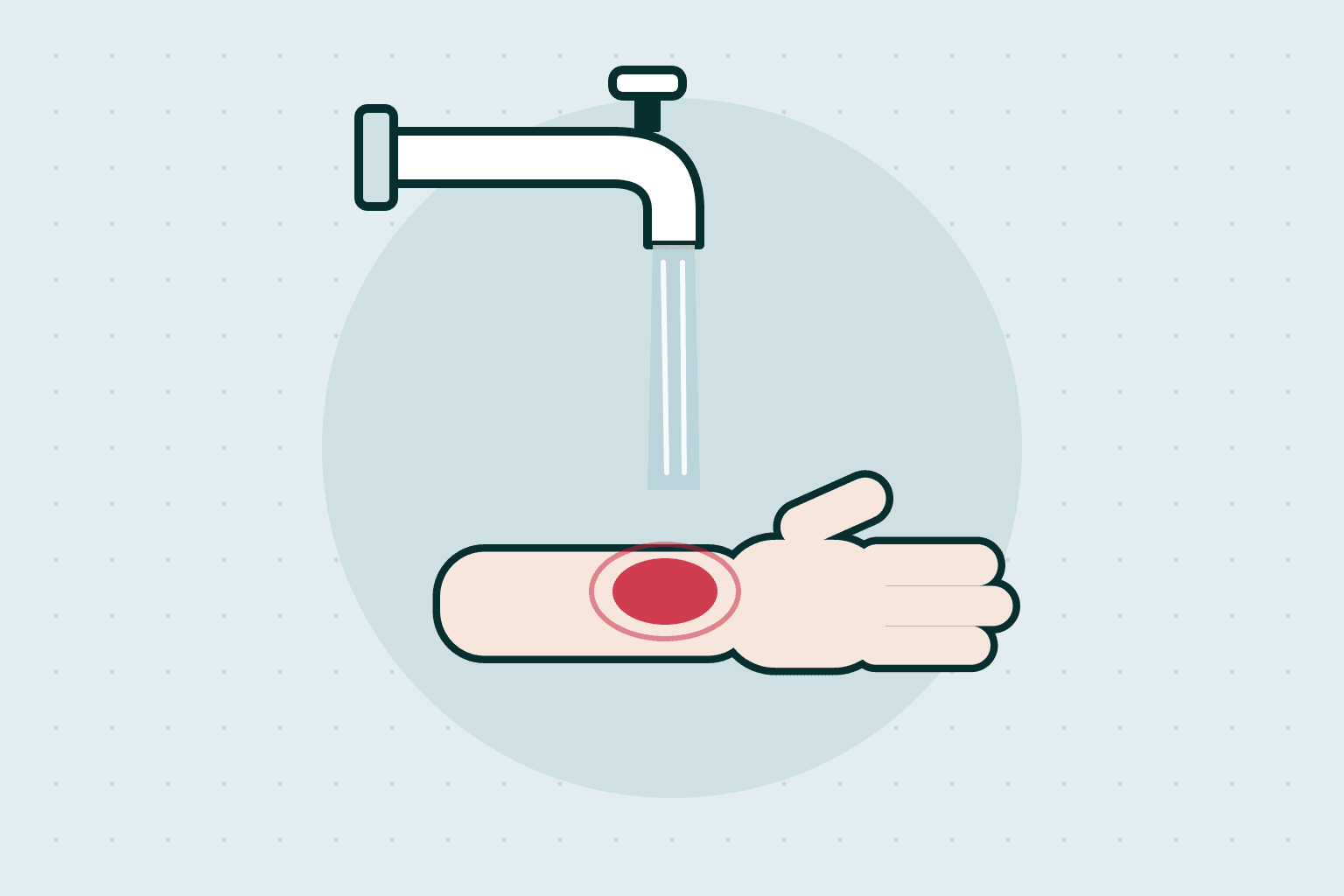
For a thermal burn or scald, cool the area under cool running water for about 20 minutes, starting as soon as possible, then cover it loosely with a clean, non-stick dressing or plastic wrap. Do not use ice, butter, oils or toothpaste, and do not burst blisters. Burns that are large, deep, on the face, hands, feet or genitals, or caused by chemicals or electricity need emergency care.
In short
- Cool a thermal burn under cool running water for about 20 minutes, as soon as possible and within 3 hours.
- Remove rings, tight items and clothing near the burn, but leave anything stuck to the skin.
- Cover the burn loosely with a clean, non-stick dressing or plastic wrap. Do not wrap it tightly.
- Do not use ice, butter, oils or toothpaste, and do not break blisters.
- Large, deep, facial, hand, foot, genital, chemical and electrical burns are emergencies.
Types and depth of burns
Burns usually come from dry heat such as fire or a hot iron, and scalds come from hot liquids or steam. Burns can also be caused by electricity, chemicals, friction and radiation. MedlinePlus describes three depths: first-degree burns damage only the outer layer of skin, second-degree burns damage the outer layer and the layer underneath, and third-degree burns damage or destroy the deepest layer of skin and the tissue beneath. Treatment depends on the cause, depth and size of the burn.
Most burns happen at home or at work. The WHO lists hot drinks, unguarded stoves, open fires, unsafe heaters and overly hot tap water among the common home hazards, and notes that children and older people are especially at risk.
First aid, step by step
- Stop the burningMake sure you are safe, remove the person from the heat source and put out any flames.
- Cool the burnHold it under cool running water for about 20 minutes, starting as soon as possible and within 3 hours. If there is no running water, use cool bottled water or a wet towel. Keep the rest of the person warm.
- Take off rings and tight itemsRemove jewelry and clothing near the burn before swelling starts, but leave anything that is stuck to the skin.
- Cover it looselyOnce it is cool, cover the burn with plastic wrap or a clean, non-stick dressing. Lay it on, do not wrap it tightly.
- Manage pain and watchOver-the-counter pain relievers can help as the label directs. If you are unsure what to do or the burn looks worse, get medical advice.
The cooling is the part that matters most, so do not delay it to look for a dressing or to call around. If a burn may involve smoke or fire in an enclosed space, get everyone into fresh air first and call 911, because breathing in smoke or hot gases can cause damage that is not visible on the skin.
What not to do
- Do not put ice on a burn.
- Do not apply butter, oils, toothpaste or household pastes.
- Do not use creams on a fresh burn.
- Do not use sticky plasters or dressings on the burn.
- Do not break blisters.
- Do not pull off clothing that is stuck to the burn.
- Do not let the person get cold. Keep them warm.
Chemical and electrical burns
Chemical and electrical burns always need emergency care, so call 911 straight away. For a chemical burn, avoid touching the substance and rinse with plenty of water unless specific guidance says otherwise. Electrical injuries can cause damage beyond what you can see on the skin.
Children and older adults
Children are especially prone to scalds and to contact with cooking equipment and flames, and older people may have impaired mobility, sensation or thinking, which makes burns more likely and harder to notice. The same first aid applies: cool the burn with running water, remove rings and loose clothing, and cover it loosely.
Get medical advice for any burn in a child under 5, even if it looks small. Do not use home pastes or oils in place of cooling. If a baby or young child has a scald, keep them warm apart from the burned area while you arrange care, and stay with them until help arrives.
When to see a doctor, and red flags
Call 911 or go to an emergency room if the burn is very large or deep, is on the face, hands, feet or genitals, was caused by acid, chemicals or electricity, or if there may be smoke inhalation. Do not drive yourself, and bring any medicines you take.
If you are unsure, or if a child is under 5, get medical advice promptly. See your primary care provider if a burn is not healing, if the area looks more painful, red or swollen over time, or if it drains pus.
Healing and hospital treatment
Small burns often heal at home in about two weeks. Large or deep burns may need hospital care, which can include medicines, cleaning and dressing the wound, IV fluids or surgery, and severe burns can require long stays, repeated surgery and rehabilitation. Once healing skin gets itchy or dry, an emollient can help, and a pharmacist can say which one to use.
- Does this burn need to be seen in person?
- How should I dress it and for how long?
- What signs of infection should I watch for?
- When can I return to normal activities and sun exposure?
Preventing burns
The WHO recommends smoke alarms, safer water temperatures and protections for young children, along with safer cooking and electrical systems. At home, that means keeping hot drinks and pans out of children's reach, turning pot handles inward, checking the water temperature before bathing a child and keeping working smoke alarms on every floor.
Questions and answers
How long should I cool a burn?
About 20 minutes under cool running water, ideally starting right away and within 3 hours. Use cool bottled water or a wet towel if you have no running water.
Should I put ice on a burn?
No. The WHO lists ice among the things to avoid. Cool running water is the right choice.
Can I pop a blister?
No, leave it alone. Do not burst blisters, and see a provider if a large blister forms or the burn looks deep.
What if clothing is stuck to the burn?
Leave it there and get medical help. Pulling it off can cause more damage.
How long does a small burn take to heal?
Expect roughly two weeks for a minor one. Slower healing, spreading redness or pus are reasons to see a provider.
Sources
Sources checked on 29 October 2026.