
First aid · · 6 min read
Choking first aid: what to do, step by step
If someone is coughing forcefully and can speak, do not interfere. If they cannot speak, cough or breathe, act at once: alternate 5 back blows with 5 abdominal thrusts for anyone over 1 year, and use 5 back blows with 5 chest thrusts for a baby, and have someone call 911. Reading is no substitute for practice, so consider a hands-on first aid course.
In short
- If the person is coughing forcefully and can speak, do not perform first aid. Be ready to act if the cough weakens.
- If they cannot speak or are struggling to breathe, act quickly and have someone call 911.
- For anyone over 1 year, alternate 5 back blows with 5 abdominal thrusts, checking after each set.
- For babies under 1 year, alternate 5 back blows with 5 chest thrusts. Do not use abdominal thrusts.
- If the person becomes unconscious, start CPR. Anyone who has choked should be examined afterward.
How to recognize choking
- Mild blockageThe person is coughing forcefully and can speak. Do not perform first aid. Stay close and encourage them to keep coughing.
- Severe blockageThey cannot speak, cough or breathe well and are struggling. Act quickly.
- AskSay: Are you choking? Can you speak? If they cannot answer, start first aid.
- Call for helpHave someone call 911 or the local emergency number. If you are alone, shout for help and start first aid right away.
Speed matters: if the brain goes without oxygen for more than four minutes, brain damage or death can result, according to MedlinePlus.
Adults and children over 1 year
- Give 5 back blowsStand behind the person, and kneel for a child. Support the upper body, lean them forward, and strike firmly between the shoulder blades with the heel of your hand.
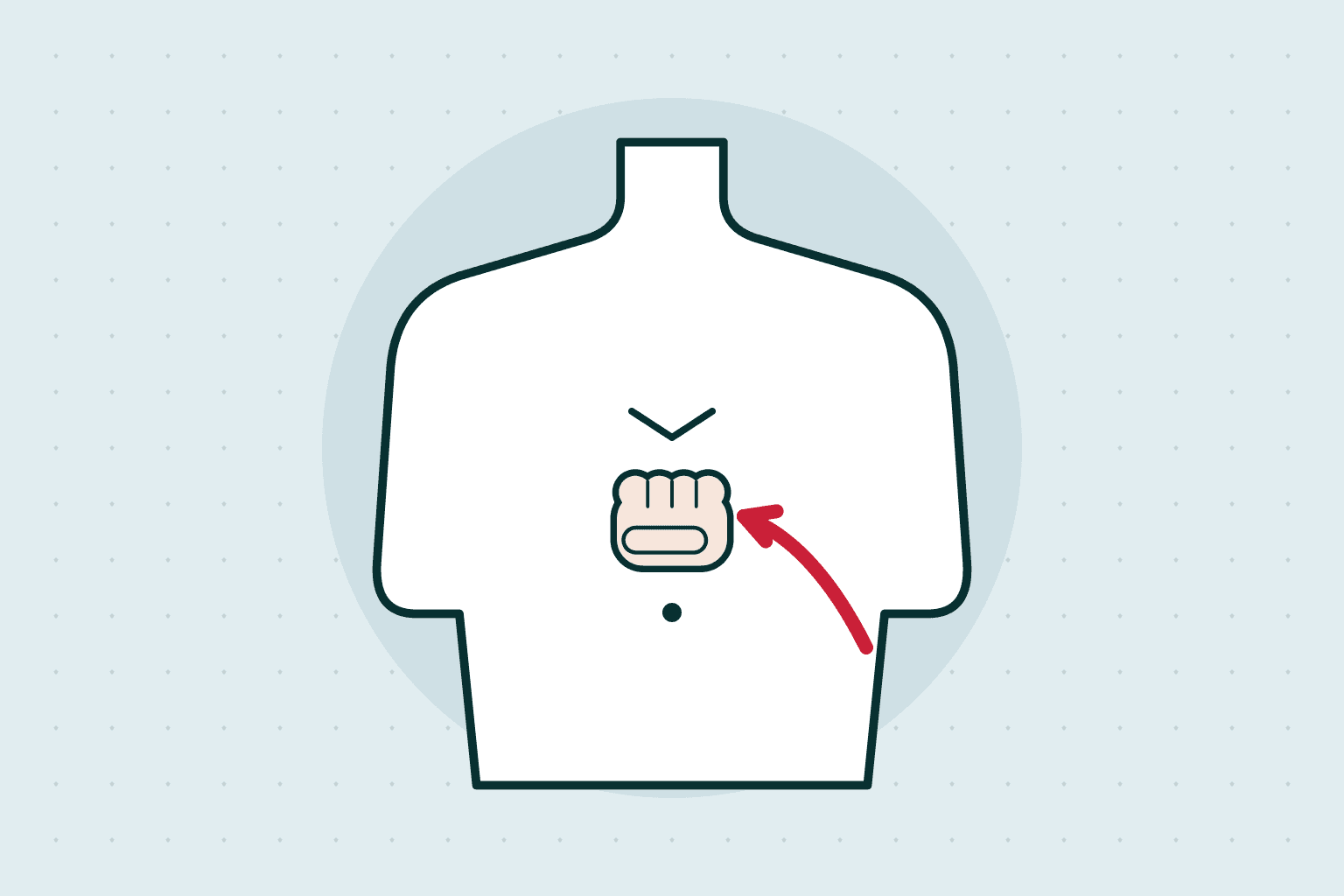
- Give 5 abdominal thrustsStand or kneel behind them. Place a fist thumb-side in just above the navel, grasp it with your other hand, and thrust quickly inward and upward.
- Alternate and checkCheck after each set whether the object has come out. Keep alternating until it does or the person becomes unconscious.
- If they pass outLay them down, make sure 911 has been called, and start CPR. Abdominal thrusts are for people who are conscious, and chest compressions are for those who are not.
- Get checked afterwardEven if the object comes out, the person should be examined, because complications can come from the choking or from the first aid itself.
Babies under 1 year
Most experts do not recommend abdominal thrusts for babies. Use the sequence below only if the baby is not coughing forcefully or crying strongly.
- Position the babyLay the baby face down along your forearm, supported by your thigh or lap, with the head lower than the body.
- Give up to 5 back blowsUse the palm of your free hand between the shoulder blades, firmly.
- Turn and give up to 5 chest thrustsTurn the baby face up, support the head, and place the heel of one hand on the middle of the breastbone just below the nipples.
- AlternateRepeat 5 back blows and 5 chest thrusts until the object comes out or the baby becomes unconscious.
- If the baby stops respondingHave someone call 911, lay the baby on a firm flat surface and start infant CPR, checking the mouth before giving breaths. If you are alone, give 2 minutes of CPR before calling.
Remove the object with a finger only if you can see it. If the baby is alert, do not grab for it.
Pregnancy, larger bodies and choking alone
For pregnant or obese people, use chest thrusts instead of abdominal thrusts. Wrap your arms around the chest, place your fist on the middle of the breastbone and give 5 firm backward thrusts.
The abdominal maneuver can be performed on yourself, but self-rescue is hard to learn from reading alone. If you live alone or are often alone, ask a trainer to show you, and keep your phone within reach when eating.
What not to do
- Do not intervene when the person is coughing forcefully and able to speak.
- Do not grab for an object in an alert baby, and do not sweep the mouth blindly with a finger.
- Do not give back blows or chest thrusts to a baby whose breathing stopped for other reasons, such as asthma, infection, swelling or a blow to the head. Give CPR instead.
- Do not delay calling 911 if the blockage is severe.
- Do not leave the person alone, or treat the episode as nothing once they recover.
Prevention
Young children are most at risk. MedlinePlus lists hot dogs, nuts, grapes, toy pieces and coins among common hazards. Keep these out of young children's reach and supervise them while they eat.
- Seat children to eat, and stay with them.
- Keep small toys, coins and other small objects away from babies and toddlers.
- Ask a pediatric provider about safe ways to prepare foods for your child's age.
- If an older relative has trouble swallowing, ask their provider for advice about their meals.
Red flags and aftercare
Red flags: call 911 at the start of any choking emergency in which the person cannot speak, cough or breathe, turns blue, or loses consciousness. Do not wait to see whether first aid works before calling.
After any episode, even a short one, keep the person still and get medical help. Anyone who has choked should be examined. Seek care again if coughing, wheezing or pain continues afterward.
What to do ahead of time
- Take a hands-on first aid and CPR course that includes practice on a manikin.
- Teach older children and relatives how to recognize choking.
- Keep the emergency number visible.
- Check your home for small objects within a child's reach.
- Ask your provider about swallowing difficulties in an older relative.
Questions and answers
What if the person is coughing?
Do not intervene while the cough is forceful and they can speak. Stay with them and be ready to act if the cough weakens or stops.
Where do I put my fist for abdominal thrusts?
Just above the navel, thumb side in, grasped with your other hand, then thrust quickly inward and upward.
Why not use abdominal thrusts on a baby?
Most experts do not recommend them for children under 1. For babies use alternating back blows and chest thrusts.
Do I still need a doctor if the object came out?
Yes. The person should be examined, since complications can arise from the choking itself or from the first aid used.
Should I give water to wash it down?
No. The first aid steps do not include drinking. Follow the back blows and thrusts, and call 911 if the person cannot speak or breathe.
Sources
- MedlinePlus — Choking first aid for age 1 and older
- MedlinePlus — Choking first aid for an infant under 1 year
- MedlinePlus — Choking
Sources checked on 29 October 2026.