
Skin · · 8 min read
Eczema (atopic dermatitis): daily care and flare-ups
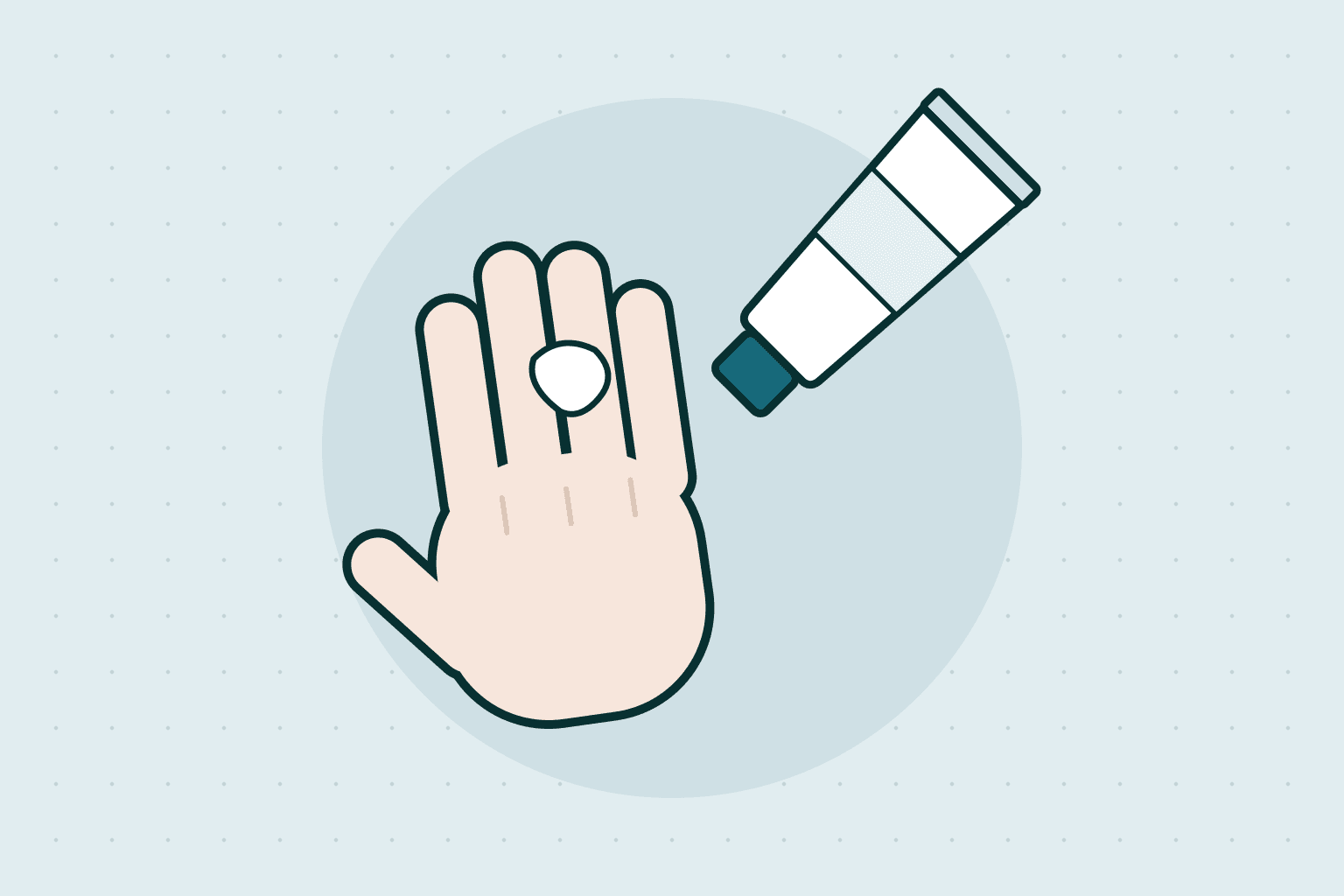
Eczema, or atopic dermatitis, is a long-lasting skin condition in which the skin's protective barrier is weak, so skin dries out and gets inflamed and itchy. It tends to come and go, with flares and calmer stretches. Care rests on two habits: moisturizing every day, even when your skin looks fine, and treating flares promptly with the anti-inflammatory plan your clinician gives you.
In short
- Eczema is a chronic, non-contagious skin condition that cycles between flares and calmer periods.
- A weak skin barrier lets moisture escape, which is why skin gets dry, damaged and inflamed.
- Moisturize every day and keep going when the skin improves, because that is the foundation of treatment.
- Topical steroids are a main treatment for flares. Your clinician decides strength, area and length of use.
- Oozing, crusts, pus, pain or fever can mean infection, and that needs medical care promptly.
What is going on in the skin
The NIAMS describes atopic dermatitis as a chronic skin disease that causes inflammation, redness and irritation. Researchers do not know the exact cause. Genes, the immune system and the environment all play a part. Changes in the skin's barrier let moisture escape, leaving skin dry and easily damaged, and some people carry gene changes that affect a protein the barrier needs.
Eczema usually starts in childhood but can appear at any age. A family history of eczema, hay fever or asthma raises the risk. It is not contagious.
Symptoms and where they appear
- intense itching, the most common symptom;
- dry, scaly or cracked patches that look red, purple, gray or lighter or darker depending on skin tone;
- rashes that may ooze clear fluid or bleed after scratching;
- thickened, hardened skin from long-term scratching.
The location changes with age. In babies it often affects the face, scalp and the skin around bending joints. In children it is more often the creases of the elbows and knees, the neck and the ankles. Teens and adults commonly get it on the hands, neck, elbow and knee creases, around the eyes and on the ankles and feet.
Moisturizers: the daily foundation
- Every day.The NHS advises applying emollients at least twice a day and continuing even when the skin improves.
- Right after bathing.The NIAMS suggests applying moisturizer right after a bath to hold water in the skin. Pat the skin dry rather than rubbing.
- Choose creams and ointments.Avoid lotions with a high water or alcohol content, which can sting. Skip aqueous cream, which can irritate the skin.
- Keep it clean.Use a pump or spoon rather than dipping fingers into a tub, and do not share your moisturizer.
- Wash gently.Take lukewarm baths, no more than once a day, with a mild unscented cleanser. You can wash with an emollient instead of soap.
Emollients can make fabric catch fire more easily, so avoid smoking and open flames when you have them on your skin or clothes.
Treating a flare
Topical corticosteroids, available as creams and ointments, reduce inflammation and are a main treatment for flares. They come in different strengths and many need a prescription. Your clinician picks the strength, the body areas and how long to use them. Skin on the face and in folds is more delicate than skin elsewhere, which is one reason to follow the plan you were given.
The NHS notes that short-term or low-dose use often causes no side effects, and that serious side effects are more likely with high doses or long use. After more than three weeks of treatment, the dose usually needs to be reduced gradually. Do not stop a steroid without talking to your doctor first. If steroid creams worry you, say so at your visit, because a clear plan with defined areas and time limits usually settles most concerns.
Other options include steroid-free anti-inflammatory creams called topical calcineurin inhibitors, which reduce inflammation and help prevent flares, and a newer cream class that may help when other treatments fail. Wet wraps can add moisture when the condition persists, but only after talking with your doctor.
Triggers and daily life
- Harsh soaps, detergents, fragrances and some cosmetics.
- Tobacco smoke and certain air pollutants.
- Overly dry skin, heat, sweating and rough fabrics such as wool.
- Stress and poor sleep.
- House-dust mites, pollen and pets, which matter for some people but not everyone.
Keeping your home at a stable, cool temperature helps. On food, the NHS says not to change your diet unless a doctor advises it. If foods seem to cause hives or flares, ask your clinician rather than cutting foods out on your own.
Signs of infection
Scratching can let bacteria in, and infections are common with eczema. The NHS says to get an urgent appointment, or call 111 in the UK, when eczema becomes blistered, crusty, leaks fluid or has pus-filled spots, is painful, swollen or warm, or suddenly worsens and spreads. A high temperature or feeling generally unwell is another warning. These signs can point to infection or to eczema herpeticum, which may need antibiotics.
Viral infections such as cold sores and warts can also occur in eczema. People with atopic dermatitis should not receive the smallpox vaccine, so tell your clinician if anyone in your household is due for it.
When to see a doctor
Make an appointment with your primary care provider or a dermatologist when treatments are not helping, when itching keeps you from restful sleep, when infections develop, or when eczema affects your eyes or eyelids. The NIAMS also notes that if the condition leaves you overwhelmed or anxious, counseling may help.
For severe, widespread eczema that does not respond to creams, a dermatologist may suggest ultraviolet light therapy, or systemic treatments such as biologic medicines given by injection or JAK inhibitor pills that need close monitoring. Oral corticosteroids are not usually prescribed, because eczema can rebound and worsen after they are stopped.
Red flags: seek emergency care for facial swelling with trouble breathing. Seek urgent care for fast-spreading painful blisters with fever.
Questions for your clinician
- Which cream or ointment, and what strength, should I use on my body, face and hands?
- How many days in a row can I use it, and what comes next?
- How often should I moisturize, and which product suits my skin?
- Does my skin show signs of infection right now?
- Would I be a candidate for light therapy or other treatments?
Questions and answers
Should I moisturize when my skin looks clear?
Yes. The NHS says to keep using emollients even when your skin improves, since the barrier problem is still there between flares.
Is eczema contagious?
No. You cannot catch it from someone else or pass it on, though infections that complicate it can sometimes spread.
Do I need an eczema diet?
Usually not on your own initiative. The NHS says not to change your diet unless a doctor advises it, and food triggers are worth discussing with a clinician if you suspect one.
Does eczema go away with age?
Symptoms often improve with age, but for some people it continues into adulthood or returns after a break. Good control is realistic even when it is long-lasting.
Can I use bleach baths?
The NIAMS says a diluted bleach bath twice a week may be recommended for some people, but only follow your own doctor's instructions on it.
Sources
- NIAMS — Atopic Dermatitis
- NIAMS — Atopic Dermatitis: Diagnosis, Treatment, and Steps to Take
- NHS — Atopic eczema
- NHS — Topical corticosteroids
- MedlinePlus — Eczema
Sources checked on 29 October 2026.