
First aid · · 8 min read
Rash in children: common causes and when to call 911
A rash is one of the commonest reasons parents look up a child's health. Most are harmless: heat rash, a reaction to a new food or a virus that will pass by itself. But occasionally a rash is the first visible sign of a dangerous illness, and hours matter. This article shows how to size up the situation quickly, which causes are most common and what should make you call 911 straight away.
In short
- A rash that does not fade when you press a glass against it is an emergency: call 911.
- A rash in a child who is alert, playing and drinking is usually not dangerous.
- A rash with a fever should be seen by a clinician the same day.
- Swelling of the lips, tongue or throat or trouble breathing needs 911.
- Photograph the rash in daylight and note the temperature, medicines and new foods.
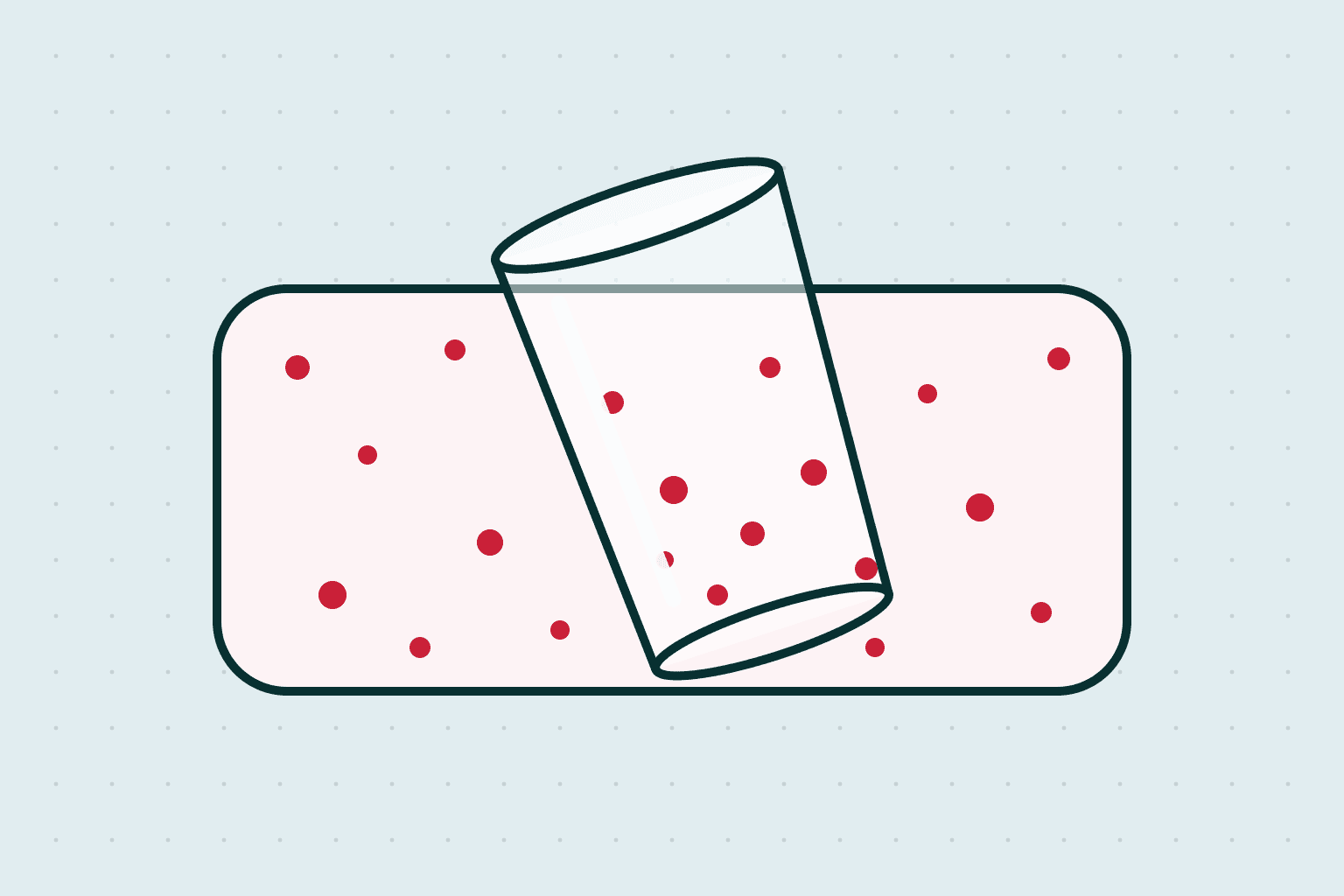
The glass test: do this first
- Get a clear glassAny smooth, clear drinking glass will do.
- Press it on the rashPress the side of the glass firmly against the spots and look through it.
- Read the resultIf the spots fade under pressure, that is reassuring. If they do not fade, call 911 or go to an emergency department at once.
A rash that looks like small bruises or bleeding under the skin and does not fade can be a sign of meningitis or blood poisoning. It often starts as small red pinpricks and can spread into red or purple blotches. On brown or black skin it is harder to see, so check paler areas: the palms, soles, roof of the mouth, whites of the eyes and inside the eyelids.
Not everyone with meningitis gets a rash, so its absence does not rule the illness out. Judge by how the child looks and acts as well as by the glass.
Common causes
- Heat rash: small, raised, itchy or prickly spots from heat and sweating. It does not spread to others.
- Diaper rash: red, raw or sore skin in the diaper area.
- Eczema: dry, itchy, cracked, scaly skin, often behind the knees, at the elbows and on the neck.
- Hives: itchy raised welts that can appear anywhere and change shape.
- Roseola: a sudden high fever and cold-like signs for about 3 to 7 days, then pink-red spots starting on the chest, tummy and back.
- Hand, foot and mouth disease: fever and sore throat, then mouth ulcers and blisters on the hands and feet.
- Chickenpox: an itchy rash that goes from spots to blisters to scabs.
- Scarlet fever: a rough, sandpaper-feeling rash, often with a red strawberry tongue.
- Slapped cheek syndrome: bright red cheeks, sometimes followed by a lacy rash on the body.
- Impetigo: sores or blisters that burst and leave golden-brown crusts; it is very contagious.
- Molluscum contagiosum: small, firm, dome-shaped spots, often with a dimple in the center.
Measles: why it matters again
Measles starts with a high fever (possibly above 104°F), cough, runny nose and red, watery eyes. Tiny white spots, called Koplik spots, can appear inside the mouth 2 to 3 days after symptoms begin. The rash comes 3 to 5 days after the first symptoms, starting as flat red spots at the hairline and spreading down the neck, trunk, arms, legs and feet.
CDC reports that about 1 in 10 children with measles get an ear infection, pneumonia affects up to 1 in 20 children, and encephalitis occurs in about 1 in 1,000. If your child may have been exposed, call your provider right away rather than walking into a waiting room. The MMR vaccine is the best protection, with 2 doses: the first at 12 to 15 months and the second at 4 to 6 years.
Hives and serious allergic reactions
Hives are itchy, raised welts that usually get better within a few days. They are often not dangerous on their own, and a pharmacist can advise on antihistamines, which may not suit young children. Seek advice if hives last more than 2 days, keep coming back, are spreading or come with a high temperature.
But a rash with sudden swelling of the lips, mouth, throat or tongue, fast or noisy breathing, a tight throat, trouble swallowing, blue, grey or pale skin, or a child who becomes limp or unresponsive is a serious allergic reaction. Call 911 immediately.
What you can do at home
If your child is alert, drinking and playing and the rash fades under the glass, you can watch and arrange a routine visit. Treatment depends on the cause.
- Heat rash: loose cotton clothing, light bedding, cool baths and a cold compress for up to 20 minutes.
- Chickenpox: encourage fluids, trim fingernails, give cool baths and use acetaminophen for discomfort; ask a doctor before using ibuprofen.
- Diaper rash: change diapers promptly, keep the skin clean and dry and leave the diaper off when possible.
- Molluscum: keep the spots covered, do not squeeze them and do not share towels.
- Never give aspirin to children for a viral illness.
Preparing for the visit
- Photograph itTake pictures in daylight, since rashes change quickly.
- Track the temperatureNote the time, the reading and any medicine given.
- Make a timelineWhen it started, where, how it spread and whether it itches.
- Note contactsWho is sick at school, daycare or home, and any recent travel.
- Bring vaccine recordsThey help the clinician rule measles and other infections in or out.
Red flags: call 911
Call 911 or go to an emergency department if your child has a rash and a stiff neck or sensitivity to light, confusion, agitation or not responding normally, difficulty breathing or very fast breathing, pale, blue, grey or blotchy skin, sudden swelling of the lips, mouth, throat or tongue, a tight throat, a first seizure, or a rash that does not fade under the glass. Do not drive yourself.
Get urgent advice from your pediatrician the same day if a baby under 3 months has a temperature of 100.4°F (38°C), a child of 3 months or older has 102.2°F (39°C) or higher, your child is feeding poorly or passing less urine, the fever will not come down, or you are simply unsure what to do about the rash. A first seizure with fever needs immediate care.
Questions for the pediatrician
- What do you think is causing the rash, and are tests needed?
- Is my child contagious, and when can they go back to school or daycare?
- What can I use to ease the itch at this age?
- Which changes should bring us back sooner?
- Would a dermatologist or allergist help?
Questions and answers
How can I tell an allergic rash from an infection?
Only an examination can settle it. Hives are itchy and change shape, while infection-related rashes often come with fever, a cold or a sore throat. There are exceptions both ways, so use the red flags above.
Should I give an antihistamine for any rash?
No. A pharmacist can advise on antihistamines for hives, and they may not suit young children. They do not treat infections, so check with your child's clinician.
Can my child go to school with a rash?
Not until a clinician has looked at it, since several childhood rashes are contagious. With chickenpox, for example, children should stay home until all the spots have scabbed.
Is a rash with fever in a baby an emergency?
Get same-day urgent advice if a baby under 3 months has a temperature of 100.4°F (38°C) or higher. If the baby is also floppy, hard to wake or has a rash that does not fade, call 911.
Sources
- NHS — Rashes in babies and children
- NHS — Meningitis
- NHS — Roseola
- NHS — Hives
- CDC — Measles Symptoms and Complications
- CDC — Measles Vaccine
Sources checked on 29 October 2026.