
First aid · · 8 min read
Sprained ankle: first aid, recovery and when to get help
A twisted ankle on the stairs, a bumped knee, a kitchen cut on a finger: everyday injuries happen to everyone, and what you do in the first hours shapes how the next weeks go. This article gives step-by-step first aid for a sprain or strain, shows which signs suggest a broken bone, explains basic wound care and lists the situations in which you should not manage this at home.
In short
- A sprain is a stretched or torn ligament; a strain affects a muscle or tendon.
- In the first days: protect, rest, ice, compress and raise the injury.
- Keep moving the area gently once pain allows so it does not stiffen.
- You cannot tell a sprain from a break by looking, so see a clinician for any red flag.
- Wash a cut with mild soap and water, press to stop bleeding and cover it with a clean bandage.
Sprain, strain and bruise
A sprain is a stretched or torn ligament, the tissue that connects bones at a joint. Falls, twists and impacts cause them, and ankles and wrists are common sites. A strain involves a muscle or tendon, often from twisting or pulling, and it can happen suddenly or build up over time.
- Sprain: pain, swelling, bruising and trouble moving the joint; some people feel a pop or tearing at the moment of injury.
- Strain: pain, muscle spasms, swelling and difficulty moving the muscle.
First aid for the first 2 to 3 days
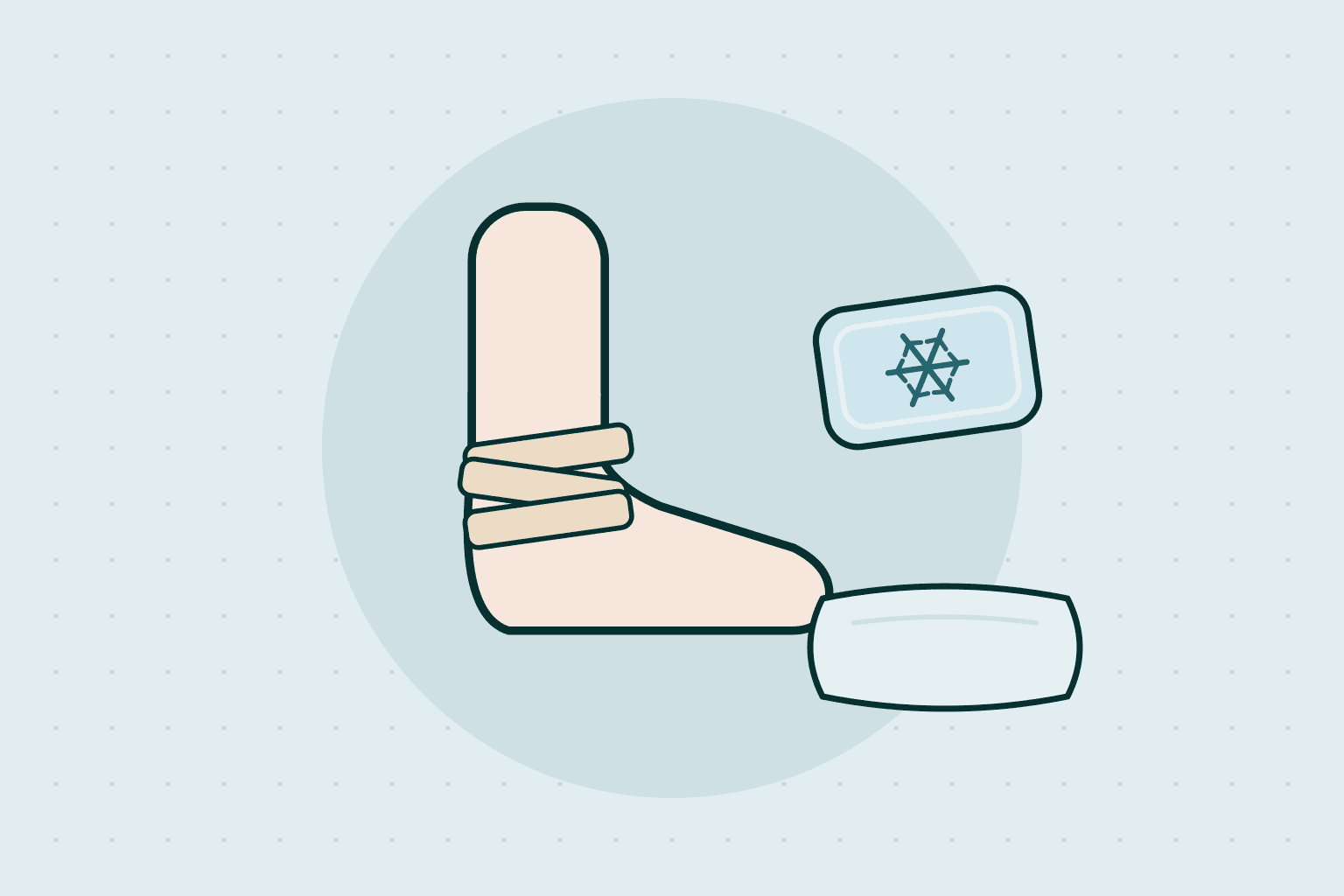
NHS describes this as PRICE: protection, rest, ice, compression and elevation.
- Protect and restTake weight off the injury and avoid movements that cause sharp pain.
- IceApply an ice pack wrapped in a cloth for up to 20 minutes every 2 to 3 hours. Never put ice straight on the skin.
- CompressWrap a bandage around the injury for support during the day. It should be snug, not tight.
- ElevateKeep the injured part raised on a pillow when you sit or lie down.
- Skip heat, alcohol and massageFor the first couple of days avoid hot baths, heat packs, alcohol and massage, which can increase swelling.
A pharmacist can advise on pain relief. Acetaminophen (paracetamol) eases pain, and ibuprofen gel, mousse or spray can reduce swelling. Check with a pharmacist or your provider before using a tablet, especially if you take other medicines.
Getting moving again
Complete rest for a long time slows recovery. Once the pain allows, keep moving the area so it does not stiffen. NHS suggests avoiding strenuous exercise such as running for up to 8 weeks. Most mild sprains improve within 2 weeks, while severe ones can take months. Later treatment may include exercise and physical therapy, so ask your provider about a program if the joint still feels weak or unstable.
Signs that it might be broken
- You heard a crack when you were hurt.
- The limb or finger has changed shape or points at an odd angle.
- You cannot put weight on it or walk more than a few steps.
- Swelling or bruising is increasing quickly, or the area is very stiff.
- The skin below the injury is numb, tingling, blue or grey, or cold to the touch.
These signs may mean a broken bone that needs an X-ray. Being able to walk on the injury does not rule a fracture out, so see a clinician if you are unsure.
Cuts and small wounds
- Stop the bleedingWash your hands, then press directly on the wound with a clean cloth.
- Clean itGently clean the cut with mild soap and water.
- Cover itApply antibacterial ointment and cover with a clean bandage that will not stick to the wound.
- Puncture woundsRinse under running water for 5 minutes, then wash with soap. Do not remove an object stuck in the wound.
- Watch for infectionWarmth, redness, throbbing pain, swelling, fever, a red streak spreading from the wound or pus-like drainage call for medical care.
See your provider promptly if the wound is large or deep (more than a quarter inch), on the face, or reaches the bone, because stitches may be needed. The same goes for bites by a person or animal, wounds caused by a fishhook or a rusty object, and a nail or similar object stuck in the wound.
Tetanus protection
CDC says adults need a tetanus booster every 10 years to keep protection. MedlinePlus also advises contacting your provider promptly after a wound if you have not had a tetanus shot in the last 10 years. If you are unsure about your vaccine record, ask your provider or pharmacist.
Red flags and when to get help
Red flags: call 911 or go to an emergency department if you heard a crack, a limb has changed shape or points at an odd angle, it is numb, tingling or has pins and needles, the skin is blue, grey or cold, or bleeding is severe or does not stop after about 10 minutes of pressure. Do not drive yourself, and call 911 if you cannot feel or move the injured area normally or have other serious injuries.
Get same-day medical advice if the injury is very painful or getting worse, swelling or bruising is increasing, you cannot put weight on it, it is very stiff, it is not improving with self-care, or you have a fever or feel hot, cold or shivery.
Questions for your provider
- Do I need an X-ray or other imaging?
- How much weight and movement is safe in the next few days?
- Which pain relief suits me, given my other medicines?
- Do I need a tetanus booster?
- When can I return to sport, and would physical therapy help?
Questions and answers
Can I walk on a sprained ankle?
Often yes, for a few steps and within the limits of pain. If you cannot put weight on it or walk more than a few steps, get it checked for a possible fracture.
How long should I use ice?
Up to 20 minutes at a time, every 2 to 3 hours in the first days, with a cloth between the ice and your skin.
Is it safe to use a heat pack right after the injury?
Not in the first couple of days. Heat, hot baths, alcohol and massage can increase swelling, so hold off until the early phase has passed.
How do I tell a sprain from a broken bone at home?
You cannot do so reliably. A crack at the time of injury, a changed shape, numbness, blue or grey skin or inability to bear weight are reasons for an X-ray and urgent assessment.
How long until I can run again?
Most mild sprains improve within about 2 weeks, but NHS advises avoiding strenuous exercise such as running for up to 8 weeks. Your provider or a physical therapist can set a return plan for you.
Sources
- NHS — Sprains and strains
- MedlinePlus — Sprains and Strains
- MedlinePlus — Cuts and puncture wounds
- CDC — Tetanus Vaccination
Sources checked on 29 October 2026.