
First aid · · 8 min read
Stroke symptoms: the FAST signs and what to do first
During a stroke, blood stops flowing to part of the brain, and the window for the most effective treatment is measured in hours. That is why the person who recognizes a stroke is often not a doctor, but whoever is standing nearby. The FAST check takes a minute to learn. Here it is step by step, with what to do and what not to do while you wait for help.
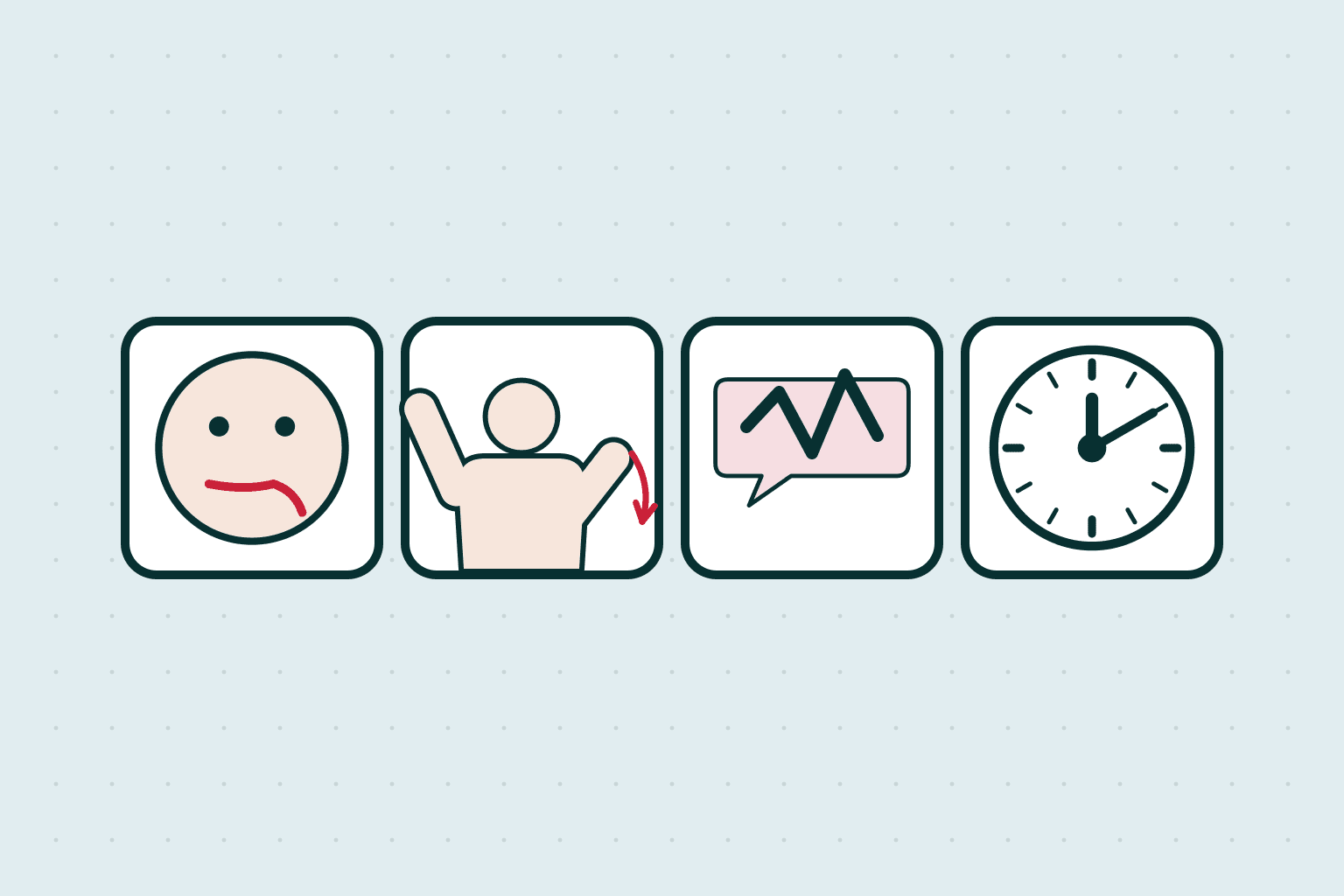
In short
- A stroke happens when blood stops flowing to part of the brain, and it is an emergency. Call 911 right away.
- Check FAST: Face drooping, Arm weakness, Speech trouble, Time to call 911. Balance and eye trouble count too.
- Note when the symptoms started. Treatment decisions depend on that timing, and the most effective treatments generally need a diagnosis within a few hours.
- Do not drive yourself or someone else to the hospital. An ambulance can begin treatment on the way.
- Symptoms that go away within minutes may be a transient ischemic attack (TIA), which is a warning and needs care straight away.
The FAST check, step by step
The CDC and MedlinePlus describe the same test. Ask the person to do three small things and watch.
- Face.Ask them to smile. Does one side of the face droop?
- Arms.Ask them to raise both arms. Does one arm drift downward?
- Speech.Ask them to repeat a simple phrase. Is the speech slurred or strange?
- Time.If you see any of these signs, call 911 right away, even if the signs go away.
The CDC's longer version adds two more checks. Balance: does the person feel off-balance or dizzy? Eyes: do they have trouble seeing normally? Other sudden signs include numbness or weakness in the face, arm or leg especially on one side, confusion, trouble understanding speech and a sudden severe headache with no known cause.
Why time decides the outcome
MedlinePlus says that for an ischemic stroke, caused by a blood clot blocking a vessel in the brain, a clot-dissolving drug has to be given within four hours of the start of symptoms, and that earlier treatment improves the chance of recovery. The CDC says the most effective treatments generally need the stroke to be recognized and diagnosed within three hours of the first symptoms.
Ischemic stroke is the most common type, about 80% of strokes according to MedlinePlus. In a hemorrhagic stroke a blood vessel in the brain ruptures and bleeds, and treatment focuses on finding and controlling the bleeding. The two types are treated very differently, which is why a brain scan at the hospital comes first.
What to do before the ambulance arrives
- Call 911 right away, and tell the dispatcher you think it is a stroke.
- Note the time the symptoms first appeared, or when the person was last seen well, and tell the medical team. The CDC says treatment decisions depend on this timing.
- Stay with the person, keep them calm, and follow the dispatcher's instructions. The NHS says the call handler will advise you on what to do.
- Do not drive to the hospital or let the person drive. The CDC says an ambulance lets medical personnel start treatment on the way.
What not to do
- Do not wait to see whether the symptoms pass. The NHS says to call even if signs have stopped.
- Do not give aspirin or other medicines on your own. Treatment differs between a clot and a bleed, and the type can only be confirmed at the hospital.
- Do not try to treat blood pressure or other conditions at home before help arrives.
- Do not take the person to a pharmacy or clinic first. An emergency department is where the stroke team and scanner are.
Transient ischemic attack: not a close call
A TIA, often called a mini-stroke, is a brief blockage of blood flow to the brain. The CDC says stroke-like symptoms that go away after a few minutes may indicate a TIA, that it signals a serious condition and that people often ignore it because the symptoms clear. MedlinePlus says it signals a much higher risk of a full stroke.
The NHS advises calling 999 in the UK, or 911 in the US, if symptoms occurred within the last 24 hours, even if they have resolved. Treat it as an emergency.
What lowers the risk of stroke
The WHO lists tobacco use, an unhealthy diet, physical inactivity and harmful alcohol use as behavioral risk factors, and raised blood pressure, blood glucose and blood lipids and being overweight as measurable ones. MedlinePlus adds heart disease such as atrial fibrillation, age and a family or personal history of stroke or TIA.
- Quit tobacco, eat less salt and more fruit and vegetables, exercise regularly, and avoid harmful alcohol use, per the WHO.
- Get raised blood pressure, diabetes and high cholesterol treated, because the WHO says drug treatment for these reduces stroke risk.
- Keep medical appointments and take prescribed medicines. MedlinePlus lists stress management and a healthy weight too.
After a stroke
MedlinePlus says rehabilitation helps people relearn lost skills and move toward greater independence and quality of life. The CDC adds that stroke can cause lasting brain damage, long-term disability or death, so follow-up with your health care team matters. A stroke can also be the first sign of underlying cardiovascular disease, the WHO notes, so risk factors need attention afterward.
Red flags and your doctor
Red flags: any one sudden sign, such as face drooping, arm weakness, speech trouble, loss of balance, vision loss or a sudden severe headache, means calling 911 now.
Between emergencies, talk to your primary care provider about your risk. Questions to bring:
- What is my blood pressure and cholesterol, and what are my targets?
- Do I have an irregular heartbeat or another heart condition that raises my risk?
- Which of my medicines protect against stroke, and how should I take them?
- What should my family do if I develop symptoms?
Questions and answers
Can I give aspirin if I suspect a stroke?
Do not. A stroke can be caused by a clot or by bleeding, and a hospital scan is needed to tell them apart, so wait for the dispatcher's or the medical team's instructions.
Should I lower the blood pressure before the ambulance arrives?
No. Leave treatment decisions to the emergency team, who will measure it and choose what is safe, and spend your time noting when symptoms began.
What if the symptoms stop?
Call anyway. Symptoms that clear may be a TIA, which the CDC says needs medical care and warns of a larger stroke.
Why does the start time matter so much?
The best treatments work only within a limited window after symptoms begin, and the team uses your timing to decide what they can safely offer.
What do the extra letters in BE-FAST mean?
B is for balance and E is for eyes, the two checks the CDC adds to face, arms, speech and time.
Sources
- CDC — Signs and symptoms of stroke
- MedlinePlus — Stroke
- NHS — Stroke symptoms
- World Health Organization — Cardiovascular diseases
Sources checked on 29 October 2026.