
Skin · · 7 min read
Sun protection: how to pick SPF and avoid sunburn
Sun protection is more than sunscreen in a beach bag. UV rays reach you on cloudy and cool days and bounce off water, sand, cement and snow, so the safest plan layers shade, clothing, a wide-brimmed hat, sunglasses and a broad-spectrum sunscreen. The FDA says to choose SPF 15 or higher, put it on about 15 minutes before going out, and reapply at least every two hours.
In short
- Check the UV index. The CDC says to protect your skin when the index is 3 or higher where you are.
- Layer your protection: shade, covering clothing, a wide-brimmed hat, sunglasses that block UVA and UVB, and sunscreen.
- Pick a broad-spectrum sunscreen with SPF 15 or higher. SPF mostly describes protection against sunburn, not how long you can stay in the sun.
- Apply about 15 minutes before going out, use enough, and reapply at least every 2 hours and after swimming, sweating or toweling off.
- Sunscreen is not recommended for babies under 6 months. Keep them out of the sun.
Start with the UV index
The UV index tells you how strong the sun's ultraviolet rays are in your area. Use it instead of the temperature to plan, because the CDC says UV rays can reach you on cloudy and cool days. The WHO adds that thin clouds have little effect and can even increase UV through scattering, and it advises not to be fooled by an overcast day or a cool breeze.
UV also reflects off water, cement, sand and snow. The WHO says fresh snow almost doubles a person's UV exposure. UV levels are highest in the 4 hours around solar noon, and the FDA advises limiting sun time between 10 a.m. and 2 p.m. Check your local weather forecast or app for the day's index.
Protect yourself in layers
- Shade: an umbrella, tree or other cover helps, but keep using sunscreen and protective clothing in the shade.
- Clothing: choose long sleeves and long pants or skirts when you can. Tightly woven fabric protects best.
- Hat: pick a wide-brimmed one with a brim all the way around that shades the face, ears and back of the neck.
- Sunglasses: look for lenses that block both UVA and UVB. Wrap-around styles also block light from the sides.
- Timing: the WHO notes that early morning and late afternoon UV is lower than at midday.
The FDA says sunscreen should be used in combination with other sun protective measures, not as your only defense.
How to choose a sunscreen
The FDA advises choosing a broad-spectrum sunscreen with an SPF of at least 15. Broad spectrum means it protects against both UVA and UVB rays. SPF mainly indicates protection against UVB and sunburn, and it does not mean you can stay in the sun 15 times longer.
No sunscreen is fully waterproof. A label that says water resistant must state whether protection lasts 40 or 80 minutes in water or while sweating, so check the label if you will be swimming or exercising. Follow the label for lip balm with SPF too.
How to apply it so it works
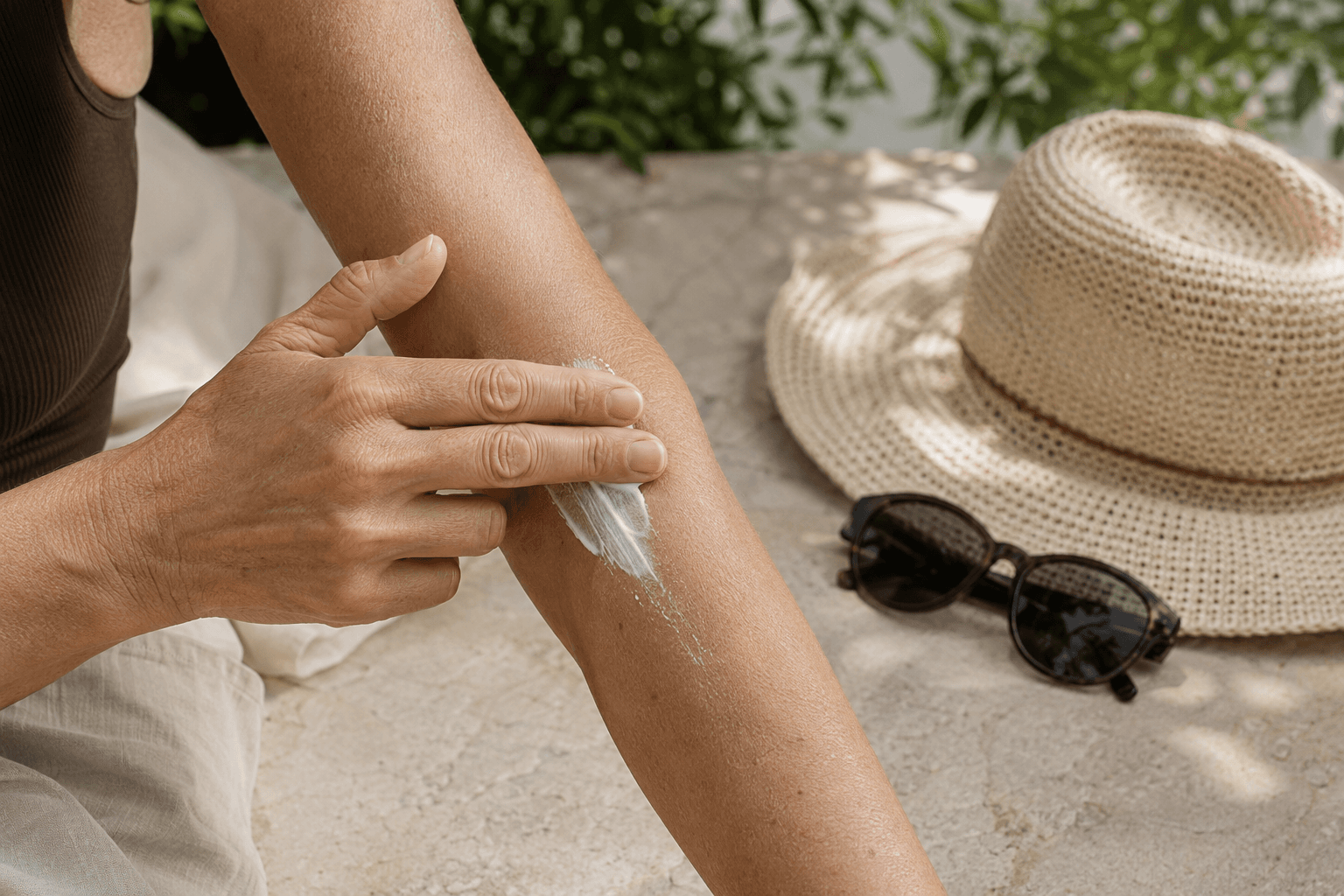
- Before you go out.Apply about 15 minutes before sun exposure so it can work fully.
- Use enough.The FDA says an average adult or child needs about one ounce to cover the body. Cover all exposed skin, including ears, neck, hands, feet and the part in your hair.
- Reapply.Reapply at least every two hours, and more often if you are swimming or sweating, and after toweling off.
- Ask for help.Ask someone to apply it to your back and other hard-to-reach spots.
Babies, medicines and sensitive skin
The FDA says the best protection for infants is to keep them out of the sun entirely. Sunscreen is not recommended for babies 6 months old or younger, and if they must be outside, use protective clothing and avoid midday sun.
Some medicines and skin products make skin more sensitive to light. Do not stop a prescribed medicine on your own: read the leaflet and ask your clinician or pharmacist whether you need extra protection or a different routine. Stop using a new sunscreen if it causes burning, swelling or a rash.
If you do get burned
Get out of the sun, cover the burned skin and keep drinking fluids. Cool the skin gently with a cool, damp cloth rather than ice placed directly on it, and do not pick at peeling skin or pop blisters. Keep the area out of the sun until it has healed.
Sun damage adds up. The CDC says too much exposure to UV from the sun or from tanning beds causes most skin cancers, which is one reason to avoid burns and tanning beds altogether.
When to see a doctor, and red flags
See a clinician for a burn with large or numerous blisters, severe pain, swelling, a burn on the face or eyes, fever or chills, nausea or weakness. Lower your threshold for infants, older adults and people with serious health conditions. Also see a dermatologist for a mole that is new or changing, a sore that does not heal, or a rash that comes back every time you are in the sun.
Red flags: call 911 for a sunburn with confusion, fainting, a very high fever, or signs of severe dehydration such as not being able to keep fluids down.
Checklist before you head out
- I checked today's UV index and know how long I will be outside.
- I have shade or a place to take breaks.
- My clothing, hat and sunglasses cover the most exposed areas.
- My sunscreen is broad spectrum, SPF 15 or higher, and I put it on in advance.
- I know when I will reapply it.
Questions and answers
Does a higher SPF let me stay out longer?
No. The FDA explains that SPF reflects protection from sunburn, and a higher number does not multiply the safe time in the sun. Reapplying on schedule matters more.
Do I need sunscreen on a cloudy day?
Yes if the UV index is 3 or higher. Clouds do not block all UV, and thin clouds can even scatter more of it.
Can I use sunscreen on a baby?
Not under 6 months. For older babies, follow the label and ask a pediatrician, and use shade and clothing first.
Is a tanning bed a safer way to get color?
No. The CDC says UV from tanning beds, as well as from the sun, causes most skin cancers.
Is water-resistant sunscreen waterproof?
No. It lasts for the time stated on the label, 40 or 80 minutes, and then needs to be reapplied.
Sources
- CDC — Sun Safety
- FDA — Sunscreen: How to Help Protect Your Skin from the Sun
- WHO — Radiation: Ultraviolet (UV)
- CDC — Skin Cancer
Sources checked on 29 October 2026.